Andhra Pradesh braces for 1.5-metre surge as Cyclone Arnab moves inland
Winds of 135kph struck the coast early Wednesday, forcing 180,000 evacuations before the storm weakened.
By Grace Almasi ·
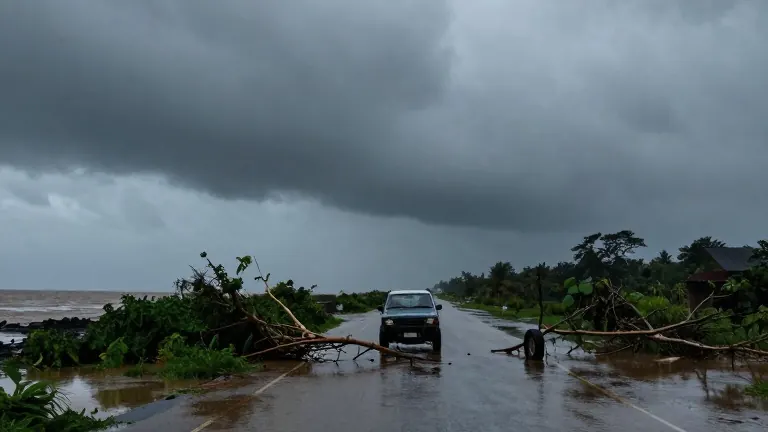
India’s Meteorological Department issued a warning on Wednesday for a storm surge that could reach 1.5 metres above tide level. The forecast targets low-lying sections of Andhra Pradesh, where Cyclone Arnab crossed the coast in the early morning hours. Officials expect the water to inundate areas that already faced heavy rainfall from the system.
The cyclone made landfall with maximum winds of 135kph (84mph). It held a "very severe cyclonic storm" classification, the third-highest category on the national scale, at the moment of impact. Meteorologists subsequently downgraded the system to "severe" as it pushed farther inland. No casualties had been reported as of Wednesday morning.
Authorities moved 180,000 people to safety in Andhra Pradesh and Odisha on Tuesday. They cited the presence of more than 12 million residents along the storm’s projected path. The evacuations preceded the arrival of strong winds and rain that disrupted daily life across the coastal region.
Transport networks faced immediate interruptions. Airlines and railway operators cancelled services, and several schools closed their doors. Fallen trees blocked highways in the affected zones, while electricity supplies were cut off in multiple districts. The damage required emergency crews to clear roads and restore power lines.
In Kakinada district, rising waters created uncertainty among local residents. One resident noted that no one could predict which house would be next to flood. The situation illustrated the rapid spread of water through the cyclone’s path, leaving families to watch for signs of inundation in their neighborhoods.
The storm’s effects extended beyond the Indian coast. Nepal’s authorities told tourists to avoid high-altitude areas from Thursday through Saturday. They cited risks of torrential rain, snowstorms, and avalanches linked to the system. The country halted the issuance of trekking permits for three days, a measure that impacts a peak hiking season where approximately 750 permits are granted daily.
Sri Lanka also took precautionary steps, closing schools to guard against flash floods and landslides. The island nation’s meteorology department warned that Arnab could trigger these hazards in vulnerable areas. These actions follow the recent recovery efforts in Nepal, which is still processing the aftermath of a glacial collapse in August that killed more than 1,400 people and left at least 5,000 missing.
Source: Al Jazeera