Cockpit Clarity: Tesla Reveals Roadster's Fighter-Jet Interface
A new video provides the most detailed look yet at the next-generation Roadster's software, highlighting a pilot-centric design that ties directly to the vehicle's extreme performance hardware.
By Tariq Mahmoud ·
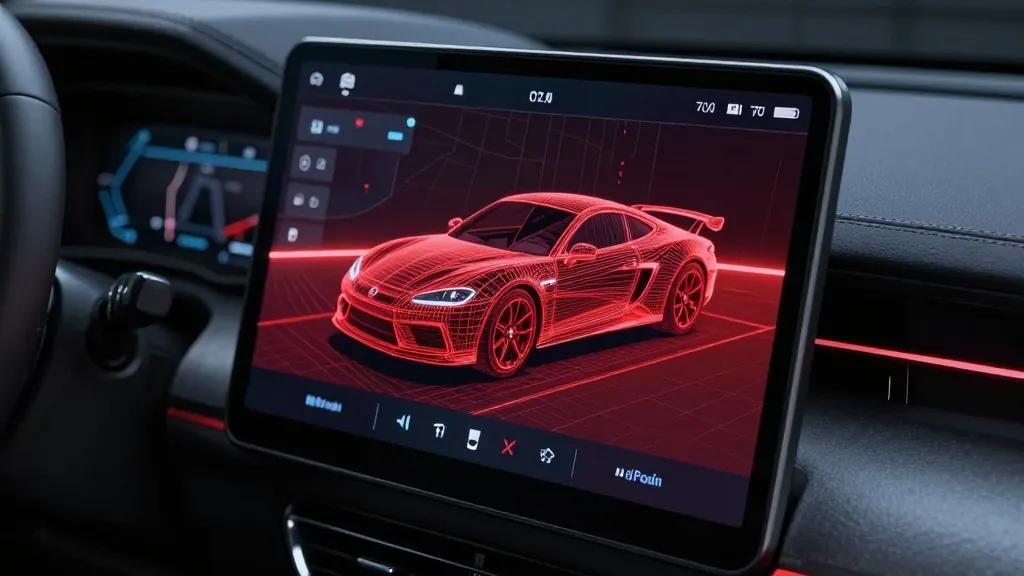
Tesla has provided the public with the most definitive glimpse yet into the digital cockpit of its upcoming next-generation Roadster. Released on Friday afternoon, a 34-second video posted to X offers a walkthrough of the vehicle's primary touchscreen, marking a significant step in demystifying the user experience for future owners. The company framed the release with a caption stating that the interface was "designed around the pilot," drawing a direct parallel to the ergonomics of fighter jet cockpits. This visual evidence serves as the latest data point in a series of disclosures surrounding the flagship model, which has been under development for years.
The footage begins with a black screen featuring red graphics and a 3D wireframe representation of the car positioned next to its squared-off yoke. As the user interacts with the digital model, specific controls for the rear wing are revealed, offering options for both low drag and high downforce configurations. The interface also displays a charging page, which includes a charge limit bar and an integrated music player. A persistent row of tabs at the bottom of the screen provides access to Home, Vehicle, Listen, Climate, and Navigate functions, establishing the baseline navigation structure for the vehicle.
However, the majority of the video focuses on the specialized Track Mode. This view presents a dense array of telemetry, including a live circuit map, a log of session lap times, and real-time data for brake and motor temperatures. Crucially, the dashboard provides individual pressure and temperature readouts for each tire, allowing for granular monitoring during high-performance driving. A dedicated setup page permits the driver to select from Auto, Low Drag, High Downforce, or Custom aero modes, while also offering the ability to adjust aero and brake balances. The system allows for the complete deactivation of stability and traction control, a feature that underscores the car's intended use cases.
A key element of this interface is the status bar, which displays a reading of "Thruster · 5,500 PSI" adjacent to a "Boost Ready" indicator. This software element directly corresponds to the hardware Tesla unveiled near Waco, Texas, on October 15. The Thrust and Rocket variants of the Roadster utilize cold gas thrusters supplied by carbon-overwrapped pressure vessels. According to previous breakdowns of the three available configurations, these versions are projected to achieve 0-to-60 mph times of under 0.9 seconds and under 0.59 seconds, respectively, figures that hinge on the functionality visualized in the new video.
The interface design represents a notable departure from the conventions established by the rest of Tesla's current lineup. Rather than centering a navigation map on the home screen, the Roadster places a representation of the car itself at the center of the display. Tesla's official materials indicate that this main touchscreen is flanked by two smaller forward-facing displays. It remains to be seen whether the detailed telemetry features shown in the Roadster's Track Mode will eventually trickle down to other high-performance models, such as the Model 3 Performance, or if they will remain exclusive to the flagship vehicle.
Despite the clarity of the video, the final interface may still undergo changes before the vehicle reaches customers. Elon Musk has indicated that production of the Roadster is scheduled to begin in 2028, providing a substantial window for potential software revisions. Additionally, Tesla has clarified that the top-tier Rocket version is not yet approved for public road use, suggesting that some of the displayed features may be tailored for track-specific applications or private circuits.
Potential buyers can currently secure their spot with a $50,000 reservation payment. The Thrust version is described as a limited release, while the Rocket variant is designated as invite-only, signaling a tiered approach to availability. These distinctions in access and configuration will likely influence how the interface is customized for different customer groups, particularly regarding the display of thruster status and boost readiness.
For those eager to inspect the physical hardware behind the software, the first public opportunity to view the car in person is arriving this weekend. The Roadster will be on display in the lobby of the Petersen Automotive Museum in Los Angeles from October 24 to 27. According to Sawyer Merritt, this exhibition marks the first time the general public will be able to see the vehicle up close, offering a tangible contrast to the digital walkthrough provided in the recent video.
Source: Teslarati