Tens of thousands of terminals: The cost of Ukraine's satellite dependency
Western governments have funded a massive fleet of Starlink hardware, forcing Kyiv and Europe to confront the financial and operational risks of relying on a single commercial provider.
By Rebecca Dawson ·
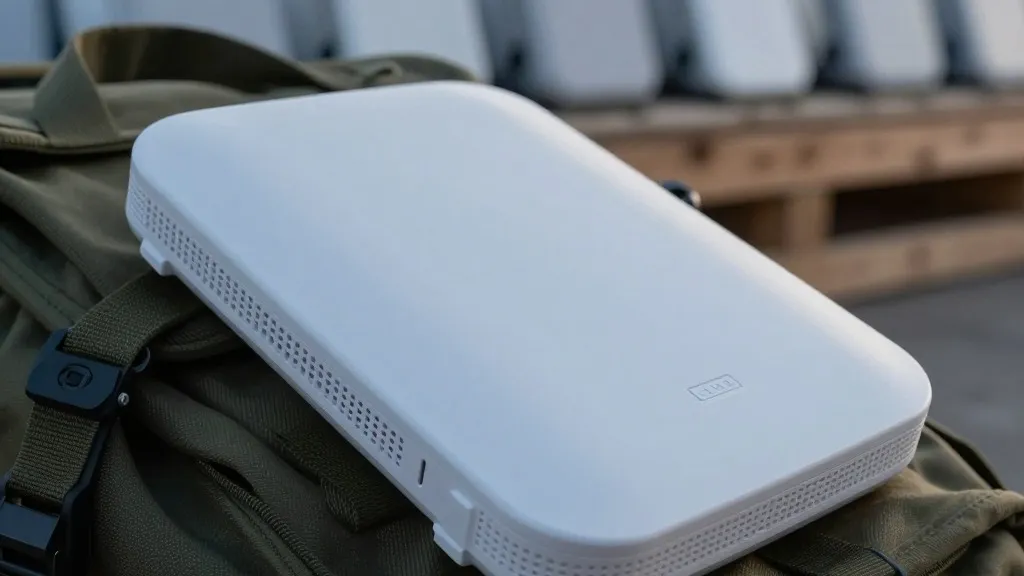
Western governments, including the United States, Poland, and Germany, have paid for tens of thousands of commercial Starlink terminals to be deployed in Ukraine, creating a significant financial exposure that is now under scrutiny. This substantial capital outlay, which also covers ongoing subscription fees, has established a deep operational reliance on SpaceX’s satellite network. As service disruptions have increased, the market dynamics surrounding this infrastructure are forcing a urgent reassessment of how European defense and civilian communications can function without this dominant provider.
The core issue is the transition from a tactical advantage to a strategic vulnerability. For years, Starlink’s role in supporting Ukraine’s resistance to Russia’s invasion was viewed as a critical success story in modern warfare. However, the network’s reliability has become questionable due to the political inclinations of its owner, Elon Musk. Recent surprise disruptions to service have highlighted the fragility of a system that was previously considered indispensable for both military and civilian connectivity.
From a market perspective, Starlink maintains a near-monopoly on high-speed satellite connectivity. It supports data streams for any user or vehicle equipped with a compact terminal, a capability that has been essential for maintaining communications and remotely controlling drones used in air defense and strikes. A representative from the Ukrainian defense company BlueBird Tech noted that Starlink currently offers some of the best satellite coverage available, with virtually no competitors when considering the combination of cost, availability, and ease of use.
Despite its market dominance, the technology has specific operational constraints that affect its utility in the field. The BlueBird Tech executive, who spoke anonymously for security reasons, explained that the main practical limitation is the need to position the antenna correctly to receive signals from the satellites. This physical requirement, while manageable in stable environments, becomes a logistical challenge in active combat zones where mobility and concealment are paramount.
The financial and technical landscape is further complicated by the integration of military-grade solutions. The US government has provided Ukraine’s military with access to Starshield, a specialized version of the service. Ukrainian defense companies are currently testing their own technologies in cooperation with the military using this platform. This dual-track approach—relying on commercial terminals funded by foreign governments while simultaneously developing military-grade capabilities—underscores the complexity of decoupling from a single commercial vendor.
The situation presents open questions for the broader European market. If the primary provider becomes unreliable or politically influenced, what are the alternative cost structures for maintaining such a vast network? The current model, where tens of thousands of terminals are subsidized by external partners, suggests a heavy dependency on external funding streams. As Ukraine and Europe work to determine how to move forward, the focus shifts from the initial deployment costs to the long-term sustainability and redundancy of the communications infrastructure.
Ultimately, the story is one of market concentration. The combination of low cost and high availability has made Starlink the default choice, but the recent disruptions indicate that this concentration carries significant risk. For stakeholders in the South Central and Texas regions interested in defense technology and satellite markets, the Ukrainian experience serves as a case study in the financial and operational implications of relying on a single, politically active market leader.
Source: Ars Technica