Musk Targets 2028 for Terafab Chip Production Amid Supply Chain Scrutiny
Tesla and SpaceX aim to begin mass manufacturing at a Texas facility by late 2028, a timeline critics view as dangerously optimistic given current global AI compute limitations.
By Gabriela Flores ·
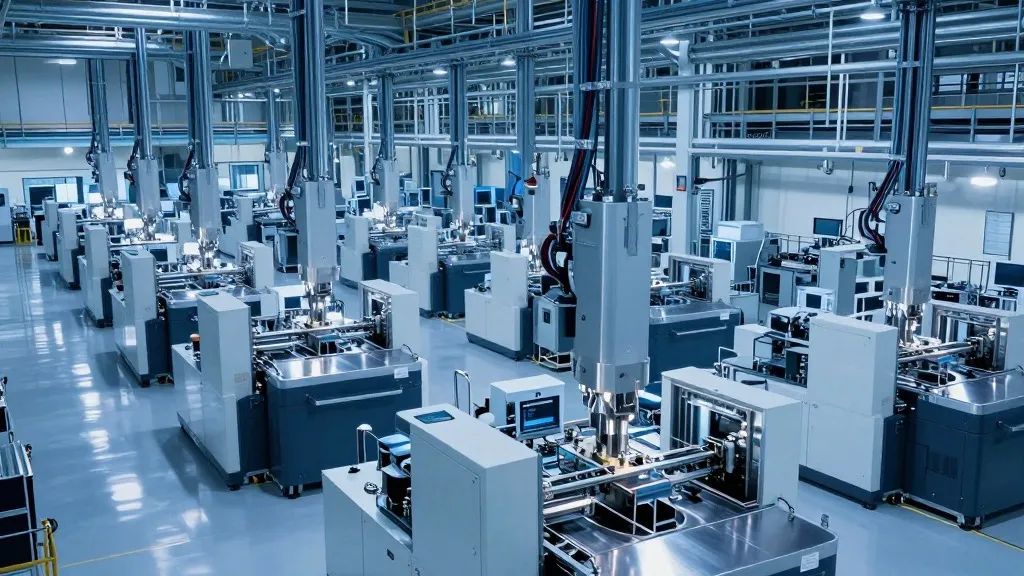
One terawatt of annual AI computing power is the staggering target for Terafab, a joint semiconductor venture between Tesla and SpaceX that seeks to match the economic output of major nations from a single Texas site. This figure places the project’s ambition in stark contrast to the current global landscape, where research firm Gartner estimates total AI-optimized data center capacity at roughly 44 gigawatts as of late 2026. Terafab’s proposed output is approximately 22.7 times the current global total, a gap that has drawn significant attention to the feasibility of Elon Musk’s aggressive roadmap.
On October 20, during a live broadcast of SpaceX’s Q3 2026 earnings call on X, Musk announced that key suppliers, including ASML, have expedited equipment shipments to support the project. He stated that volume chip production at the primary facility in Gibbons Creek, Texas, is targeted for the third or fourth quarter of 2028. Musk described these dates as "highly aspirational" with "big error bars," acknowledging the difficulty of the schedule while expressing gratitude to suppliers for accelerating deliveries to meet these goals.
The facility, located in Texas, is designed as a vertically integrated plant that will fabricate logic, memory, and advanced packaging internally. It will utilize Intel’s 14A manufacturing node technology and traditional extreme ultraviolet lithography systems. Intel officially joined the venture in April 2026 to co-develop and refactor silicon fabrication technology. The project also relies heavily on ASML, the world’s sole commercial supplier of the $400 million EUV lithography machines required for leading-edge production, with the first tool reportedly slated for delivery in mid-2027.
Beyond the semiconductor infrastructure, Musk outlined broader computing ambitions during the same broadcast. He expects his AI companies to have 2.5 to 3 gigawatts of computing capacity active by the end of 2026, with a highly confident outlook on adding an incremental 10 gigawatts in 2027. This would bring total AI compute to 13 gigawatts by the end of next year, a milestone that surpasses other major projects like the restructured 10-gigawatt Project Stargate and Meta’s 5-gigawatt Hyperion, both of which are expected to reach full capacity in the 2030s. To achieve this, SpaceX and xAI are aggressively procuring next-generation NVIDIA architecture, with plans to bring a 440,000-GPU "Vera Rubin" training cluster online by the end of Q2 2027.
The supply chain for Terafab is extensive, involving American equipment manufacturers such as Applied Materials, Lam Research, and KLA Corporation, as well as Japan’s Tokyo Electron. These firms will provide front-end processing, metrology, and process control machinery. Additionally, Tesla and SpaceX are in talks with approximately 10 South Korean equipment makers, including Hanmi Semiconductor and HPSP, for advanced packaging and specialized components. SpaceX plans to manufacture its first experimental test chip at its research fabrication facility in Austin, Texas, around Q2 2027, serving as a preliminary step before the main production line in Gibbons Creek becomes active.
Critics and industry experts have questioned the validity of the 1-terawatt ambition, noting that global AI computing capacity has grown by roughly 3.3 to 3.4 times per year since 2022, according to EpochAI. While the growth rate is substantial, reaching Terafab’s target would require a sustained exponential increase that outpaces current historical trends. The project aims to mitigate future shortfalls of cutting-edge AI processors from external foundries like TSMC, supplying chips for xAI clusters, self-driving vehicles, Optimus humanoid robots, and SpaceX’s orbital AI data centers.
Musk claimed that once fully operational, the commercial value of Terafab’s chip output would place it within the top 20 global country GDPs from a single physical building. For context, the 20th country on that list is Switzerland, with a GDP of around $1.14 trillion. The announcement highlights the massive scale of the investment, which is described as a multi-billion-dollar undertaking designed to consolidate the semiconductor supply chain under one roof in the South Central United States.
The next phase of development hinges on the successful integration of expedited equipment and the stability of the supply chain, which remains tight across the industry. While Musk has emphasized supplier cooperation, the gap between the current 44-gigawatt global capacity and Terafab’s 1-terawatt goal suggests that any delays in the 2028 timeline could have significant implications for the broader AI infrastructure landscape.
As the project moves toward its 2027 test chip milestone, stakeholders will be watching closely to see if the "highly aspirational" timeline holds up against the physical constraints of semiconductor manufacturing. The interplay between accelerated supplier deliveries and the massive capital requirements for next-generation lithography will determine whether Terafab can deliver on its promise to reshape the global AI compute market.
Source: Tom's Hardware