Dementia Care: Arts Programs Reconnect Memory and Emotion
Experts advise families to seek local music and art resources to support mood and dignity for loved ones with memory impairment.
By Renata Mehta ·
Families caring for relatives with dementia can use music, dance, poetry, and visual art to maintain emotional connections, according to a group of aging specialists and physicians. While these creative activities do not cure the disease, they serve as tools to support mood, preserve dignity, and foster interaction between caregivers and patients.
The approach relies on the understanding that dementia alters memory but does not erase the capacity for feeling. Experts argue that the arts access different parts of the brain that often remain intact even as cognitive decline progresses. This allows individuals to engage with rhythm, beauty, and expression in ways that standard conversation may no longer permit.
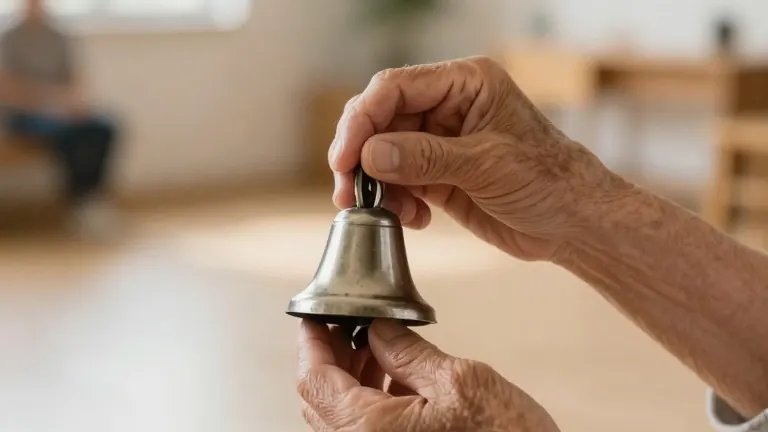
Amy O’Rourke, an aging expert, recommends that families start by searching for local resources. She suggests using specific search terms such as "dance and dementia," "arts and dementia," or "music and dementia" to find nearby programs. O’Rourke points to her early career as an activity director, where she observed residents participating in a bell choir. In that setting, each resident held a bell, and a director would point to cue them. O’Rourke noted the visible impact the activity had on the participants.
The specialists emphasize avoiding rigid expectations when introducing these activities. O’Rourke described a case where a caregiver brought a client with memory impairment to an art class. The client had no prior experience with drawing or watercolors, yet she began producing artwork. "She had never done art before. She had never drawn. She had never done any kind of artwork at all," O’Rourke said. "And so I realized, don’t put any expectation on someone with a memory impairment. Anything is possible." She advised families to focus on the internal connection rather than the quality of the output.
Gerontologist "Sam" Cradduck explained that the arts often bypass damaged neural pathways. "You’re tapping into something that maybe hasn’t been affected yet," Cradduck said. She cited the association between smells, music, and long-term memories. Cradduck referenced the work of Naomi Feil, known as the mother of validation technique in dementia training. Cradduck described a video of Feil with a woman who had not spoken for years. The woman began tapping her arm and singing "Jesus Loves You." She continued the rhythm with increasing speed until she was fully singing the song. "She just started tapping her arm and singing 'Jesus Loves You,'" Cradduck said. "She just kept doing it, and she got faster and faster with the rhythm. All of a sudden, this woman who hadn’t spoken a word in years started singing this song."
Dr. Rhea Rogers, a board-certified physician, noted that dementia changes how a person remembers events but does not change how they tell their story. "They find a different way to tell the story," Rogers said. She explained that creativity and the arts operate in a distinct area of the brain that is frequently spared by the disease.
Katherine Ambrose, an aging well coach, added that the benefits extend to cognitive function and emotional regulation. "It’s not just memory. It’s cognition," Ambrose said. She described the arts as a creative outlet that provides a calming method of expression. Ambrose also highlighted the value for caregivers, noting that these activities offer a peaceful shared experience. "It gives you a peaceful activity that everyone can be a part of," Ambrose said. "Sometimes it can be agitating, but most of the time it’s worth trying because it can be something really powerful for therapy and a powerful form of care."
The experts agree that while dementia may strip away specific abilities, it does not remove the human capacity to feel. "You can feel beauty and you can feel rhythm," Cradduck said. Families are encouraged to look locally for programs that incorporate these elements into daily care routines.
The specialists recommend that families begin by identifying local resources for dance, arts, and music programs designed for people with dementia. They advise setting no expectations for the outcome, recognizing that a person with a memory impairment may take to art without any prior experience. The goal is to provide a calming form of expression for the patient and a shared, peaceful activity for the caregiver.