FEMA Cuts and New Bureaucracy Stall $60 Billion Helene Recovery
A new investigation finds that administrative changes have created a $17 billion backlog and left 2,100 North Carolina homeowners without state rebuilding aid.
By Amit Chukwu ·
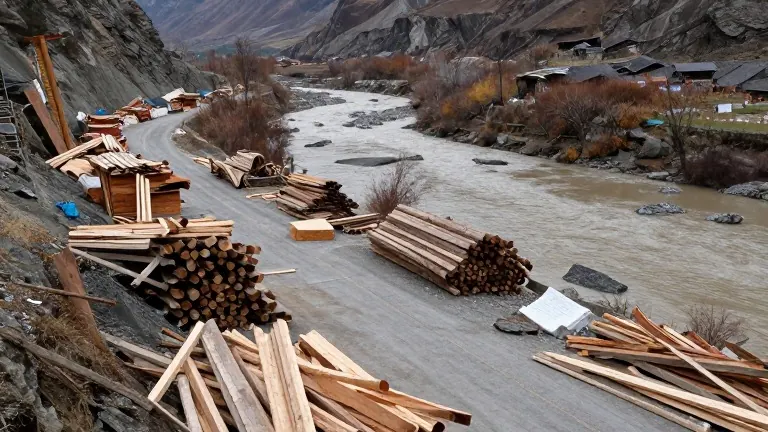
North Carolina communities affected by Hurricane Helene are facing a recovery process that has slowed to a crawl. A three-episode podcast investigation by Blue Ridge Public Radio and FRONTLINE reveals that federal policy changes have delayed or denied assistance to thousands of residents. The September 2024 storm caused nearly $60 billion in damage and killed at least 107 people in the state. Despite these losses, the new reporting indicates that bureaucratic hurdles have increased since President Donald Trump took office.
The investigation details how the Trump administration implemented policies in early 2025 that slowed the flow of disaster relief funds approved by Congress. Then-Homeland Security Secretary Kristi Noem introduced a requirement that created a $17 billion backlog in aid to states. Additional delays resulted from staff cuts at the Federal Emergency Management Agency and decisions made by the Department of Government Efficiency. In North Carolina, local governments remain unpaid for tens of millions of dollars in recovery spending. These funds were largely allocated for debris removal. Without reimbursement, some counties cannot afford to continue cleaning up massive piles of debris on private property and in rivers.
Changes to federal policy have also reduced the number of homeowners eligible for FEMA assistance. The administration revoked a previous policy that simplified the qualification process for the FEMA buyout program. This change occurred months after the storm hit and after North Carolina officials had already begun processing applications. The state was forced to spend months reapplying for buyouts. Consequently, the state had to turn away some homeowners who had previously qualified for the program.
Long-term recovery funding remains stuck in Congress. Since President Trump assumed office, lawmakers have not approved any new Helene-specific recovery funding. Approximately 2,100 eligible homeowners in North Carolina will not receive help from the state’s RENEW NC home rebuilding program without additional appropriations. Craig Fugate, a former FEMA administrator, told reporters that the region has effectively lost two years of recovery time.
The political landscape in Congress will change in January when Democrats take the majority in both the House and Senate. Representative-elect Jamie Ager, a Democrat from Western North Carolina, said securing additional recovery funding is his top priority. He plans to work with the Trump administration to deliver that funding. In the Senate, former Governor Roy Cooper will join the chamber to advocate for North Carolina's needs. Matt Calabria, director of the Governor's Recovery Office, stated that an additional congressional appropriation is the single most important step for the state's recovery.
The podcast series, titled 'A Man-Made Disaster,' is based on more than a year of reporting. The team reviewed hundreds of government records and interviewed local, state, and federal officials. The production is supported by the John S. and James L. Knight Foundation through FRONTLINE’s Local Journalism Initiative.