HS2 Tunnel Breakthrough Creates 8.8 Mile Link Under London
The new rail corridor connects Old Oak Common to West Ruislip, a project that has already moved over one million tonnes of clay.
By Amit Chukwu ·
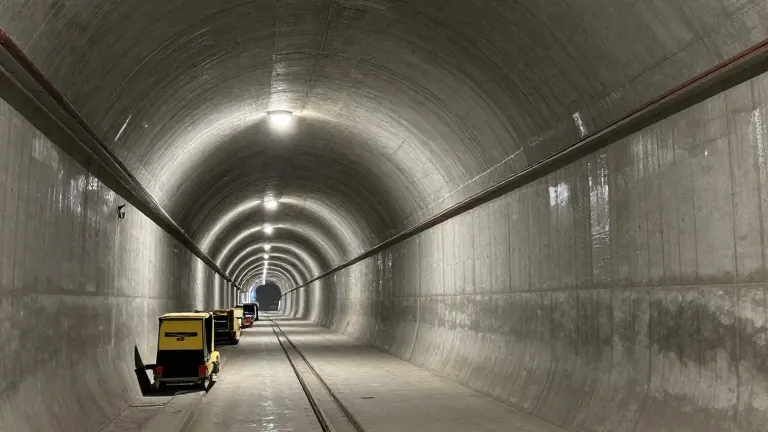
More than 1 million tonnes of London clay were removed from the Old Oak Common site to make space for six new high-speed rail platforms. The excavation process utilized a conveyor belt system to transport the soil directly to trains. This method kept an estimated 75,000 lorries off local roads during the construction phase.
The project began with the construction of giant tunnels intended to connect the sprawling Old Oak Common railway station to the main line. The route leads to the final leg of the journey toward Euston. In October, workers completed a specific breakthrough between Old Oak Common and the crossover box. This maneuver created an 8.8-mile connection to the West Ruislip tunnel. The final blocks were pushed out in a manner described as Jenga-style.
The new infrastructure is designed to sit approximately 98 feet underground. This depth allows the station to integrate high-speed rail, Elizabeth line, Great Western Railway, and Heathrow Express services under a single roof. The station structure itself spans 2,788 feet, a length that could accommodate the Burj Khalifa. The site is located on Victoria Road in North Acton, near the upcoming hub.
Rail Minister Lord Hendy visited the freshly excavated tunnel on November 4. He noted that the scale of the underground section is difficult to comprehend. He stated that the station is nearly one kilometer long and represents the largest station built in Britain for at least 100 years. He added that the government has reset the project and expects it to transform travel to Birmingham, the north of England, and Scotland.
Workers on the site have paused operations to allow for the inspection. HS2 senior communications manager Clive Green said that in normal circumstances, no one else would be walking down the tunnel. Dave Lock, the project director, explained that modern waterproofing and sprayed concrete protect the structure. He noted that these materials are expected to last beyond 120 years, unlike the concrete used in Tube lines built in the 1920s.
The tunnel walls are currently covered with waterproofing and sprayed concrete. Rail tracks and cables will be laid in the coming years. An emergency cut-through from the tunnel is also planned. The high-speed trains will slow down to a fraction of their 200mph top speed in this final stretch before reaching the platforms at Old Oak Common.
The site is scheduled to transport millions of people by 2039. The current work involves preparing the structure for the installation of rail and cables. The project aims to create a connection that supports growth, jobs, and homes in the London area.
More Business · Customer Complaints · Report a business · Got a Story?