Iran Strikes U.S. Bases For Billions
An analysis confirms 115 attacks damaged 26 sites, forcing the military to move key assets out of the Persian Gulf.
By Renata Mehta ·
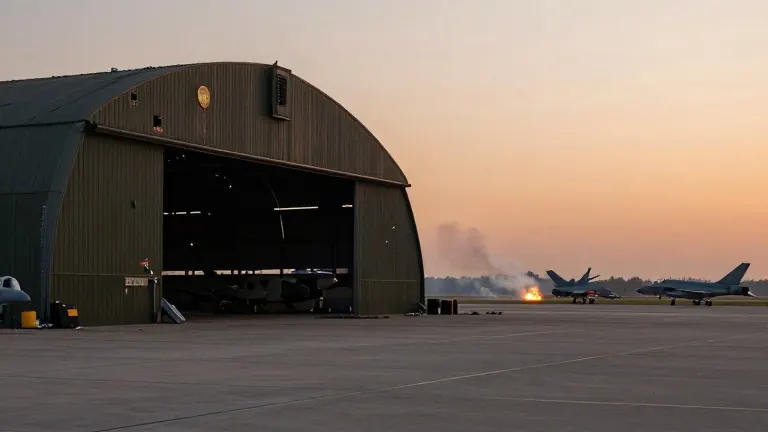
Iran destroyed billions of dollars in U.S. military equipment across the Middle East. An Associated Press analysis using satellite imagery and official briefings confirmed that more than 115 drone and missile strikes hit 26 bases and sites. The attacks began in late February and continued through August.
The strikes were not random. Iran first targeted early-warning systems and aircraft hangars. This strategy cleared the way for subsequent attacks on warehouses, troop housing, and other infrastructure. The damage forced the United States to move many assets out of the Persian Gulf. This includes aircraft, air defense systems, and communications gear.
Kuwait bore the heaviest losses. Ali Al Salem Air Base was struck at least 30 times. At least 15 aircraft hangars were damaged or destroyed. Camp Buehring in Kuwait lost its gym in March and its store in late July. The base garage and dining room also suffered severe damage. Six U.S. soldiers died in a drone attack at Port Shuaiba on March 1.
Other targets included sites in Bahrain, Iraq, Jordan, Oman, Qatar, Saudi Arabia, and the United Arab Emirates. At Prince Sultan Air Base in Saudi Arabia, a strike damaged the back half of a Boeing E-3 Sentry surveillance aircraft. Two aerial refueling tankers were also hit. A Congressional Research Service report states that 15 U.S. aircraft were damaged on regional bases in total.
Iran focused on high-value radar systems. It destroyed enclosures protecting U.S. radars at Camp Arifjan and Naval Support Activity Bahrain within the first two days of the war. A radar in Jordan was destroyed. Raytheon, the manufacturer, stated that only 13 of these specific units exist globally. Budget documents show each unit costs approximately $500 million. Another radar in Qatar was damaged. That system was purchased in a 2013 deal worth $1.1 billion.
Pentagon spokesman Sean Parnell said U.S. forces are well protected. He stated that service members in Central Command have everything they need to ensure Iran does not obtain a nuclear weapon. However, U.S. Central Command has refused to specify the extent of damage to bases, citing operational security. The administration has also delayed the release of satellite imagery, calling it a national security risk.
Raphael Cohen, a director at the RAND School of Public Policy, noted that modern warfare makes militaries susceptible to cheap drone attacks. He said the current situation should serve as a wake-up call for the United States. The U.S. and Iran both say hostilities could resume. No endgame for the war has been articulated.
Source: HuffPost