South Dakota Water Crisis: Aquifer Levels Drop Amid Drought and Growth
State officials and experts warn that falling groundwater levels and population growth are straining water systems, prompting proposals for new infrastructure and conservation measures.
By Grace Almasi ·
South Dakota is facing a tightening water supply as underground aquifers decline and drought conditions persist, according to state officials and hydrologists. The state’s population growth and increased water use in residential, commercial, and agricultural sectors are outpacing the natural recharge of these water sources.
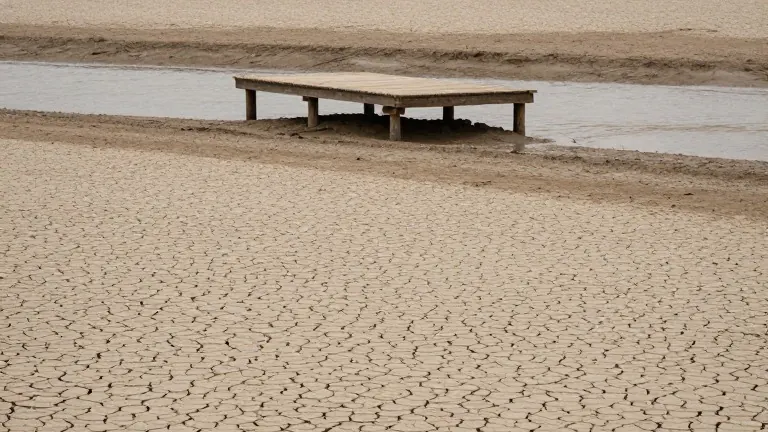
The physical effects are visible in the central Black Hills. Bear Butte Lake, typically a 215-acre body of water 15 feet deep, has shrunk to a narrow strip of surface water. Depths are now measured in inches, and the lakebed surrounding the popular fishing pier is exposed. Jeremy Kientz, a fisheries supervisor for the South Dakota Game Fish and Parks Department, identified low precipitation as the primary cause of the lake’s depletion, noting that the lake is not fed by springs or creeks.
Across the state, water levels in West River areas are dropping at Angostura, Bell Fourche, and Pactola reservoirs. Spring Creek, which runs through the central Black Hills, has dried up in sections that historically flowed freely. In East River regions, rural water systems are struggling to accept new customers because the aquifers they rely on are drying up or fully allocated by existing water rights contracts. Jay Gilbertson, manager of the Brookings-based East Dakota Water Development District, described the situation as a statewide issue.
Gilbertson warned that if water extraction continues at the current pace, available supplies will be exhausted. He stated that the next family or business moving to South Dakota may need to bring their own water. Experts are concerned that drought conditions are preventing aquifers from recharging sufficiently while the number of drilled wells continues to rise.
Legislative efforts are underway to address the shortage. State Sen. Helene Duhamel, a Rapid City Republican, is leading efforts to secure new water sources. She highlighted a proposal to build a Missouri River pipeline to the Black Hills region and expansions of existing systems in East River areas. Duhamel noted that rural water systems are planning expansion projects totaling $13 billion over the next few decades.
In western South Dakota, where few systems tap the Missouri River, municipalities have increased drilling into the Madison, Inyan Kara, and Minnelusa aquifers. The U.S. Geological Survey reports that municipal wells in four major Black Hills counties drawing from these aquifers have increased from fewer than a dozen in 1960 to nearly 100 today. Individual and smaller system users have also increased their draw on these underground supplies.
The Ogallala Aquifer, which spans eight states and supplies about a third of the nation’s irrigation water, is also showing signs of stress. A 2022 NASA Earthdata analysis indicated that the aquifer is not recharging fast enough to offset heavy usage, with water levels dropping by up to 200 feet in some locations. Scientists are monitoring this decline closely due to its impact on the agricultural breadbasket.
New industrial demands are adding pressure to local supplies. Powertech USA, a subsidiary of enCore Energy, has proposed the Dewey-Burdock in-situ uranium mining project northwest of Edgemont. The project would use billions of gallons of water annually from the Inyan Kara and Madison aquifers. Recent filings with the South Dakota Department of Agriculture and Natural Resources indicate a plan to drill 1,000 wells into the Inyan Kara aquifer for nearly 2.4 billion gallons per year, with a net removal of 89 million gallons annually. The company also proposes drilling two wells into the Madison aquifer to remove about 83 million gallons per year.
Public comment on the uranium project is open until November 9. A hearing before the South Dakota Water Management Board is scheduled for December 2, and the proposals have been recommended for approval by the chief engineer of the water rights program. In the interim, state officials are urging greater conservation and reuse. State Rep. Mike Derby, a Rapid City Republican, co-chairs a legislative water development work group. He described the current situation as a wake-up call for lawmakers. Duhamel said the 2027 legislative session will focus on finding funds for water projects as the state grapples with the growing shortage.