Tiny Robotic Ducks Steal the Show in Berlin
A viral moment involving Nvidia’s chief executive and a flock of adorable bots has driven preorders past 20,000 units just weeks before the holidays.
By Wei Zhang ·
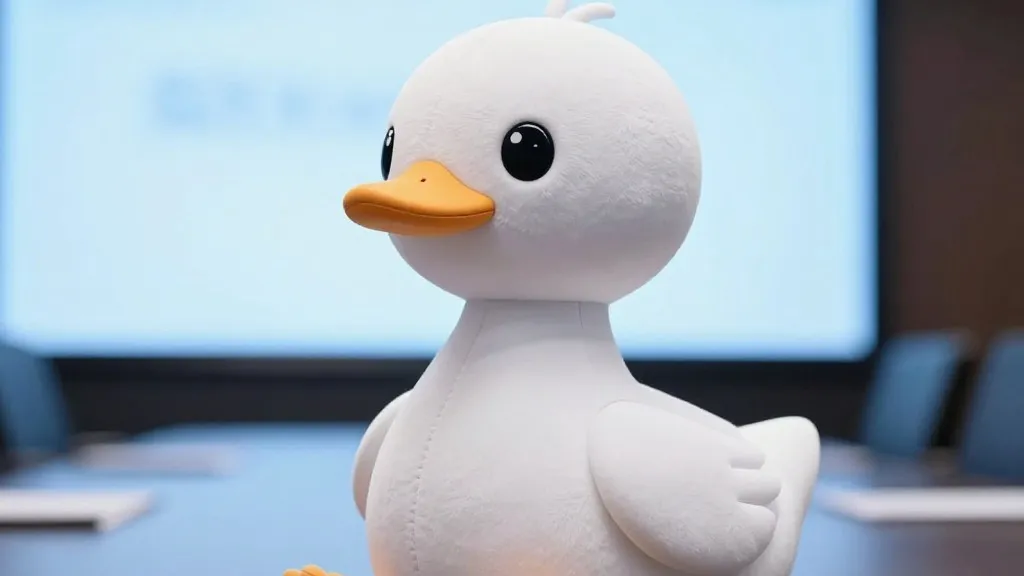
Preorders for a new line of robotic ducks surpassed 20,000 units within a day of a viral video circulating online, signaling a potential holiday sensation. The surge in interest was triggered by a clip showing Jensen Huang, the chief executive of Nvidia, interacting with a group of these small machines during his keynote address at the GTC conference in Berlin earlier this week. The footage captured the devices waddling across the stage, executing somersaults, and mimicking the sound effects of the droid R2-D2 from the Star Wars franchise.
The Microducks, as they are known, demonstrated a range of programmed behaviors that resonated with viewers. In the video, the robots can be seen sitting, falling over to simulate napping, and performing acrobatic moves when given voice commands. Clem Delangue, a representative for Hugging Face, confirmed the preorder milestone in a social media post. He suggested that these devices might become the best-selling robot of the year, noting that promotional materials feature adults playing with them, which implies the toy may appeal to a broader demographic than just children.
The devices are expected to arrive in time for the Christmas season, positioning them as strong contenders for the top holiday gift. The timing is critical, as the rapid uptake suggests consumers are eager to secure the robots before the holiday rush. Delangue’s comments indicate that the company is monitoring sales data closely to gauge whether the novelty factor translates into sustained market dominance. The fact that the robots are open-source devices adds another layer of appeal for tech-savvy buyers who enjoy customization.
The Microducks are manufactured by Pollen Robotics, a company that was acquired by Hugging Face in 2025. Hugging Face, in turn, was purchased by Nvidia in September, making the robotic ducks part of the GPU giant’s portfolio. This is not the first robot from the Hugging Face stable; the company previously released the Reachy Mini, which also garnered attention for its design. The integration of these robotics projects into Nvidia’s ecosystem highlights the company’s expanding reach beyond its traditional hardware focus.
The robots are trained using Nvidia’s technology stack. Simulations of the ducks are taught basic maneuvers, such as walking, sitting, and standing, which are included in the standard firmware. Pollen Robotics has stated that owners can teach their devices new tricks and share these customizations with the wider community. This open approach allows for a dynamic user experience where the robots can evolve over time based on community contributions. The use of simulation for initial training ensures that the devices ship with reliable, pre-programmed behaviors.
The viral success of the Microducks offers a lighthearted contrast to recent news in the artificial intelligence sector. Earlier in the week, the industry faced scrutiny as AI involvement was linked to a series of cyberattacks, creating a tense atmosphere for many observers. The cheerful image of the robotic ducks provides a moment of levity, reminding the public that the technology can also be entertaining and accessible. For many viewers, the charm of the video was compelling enough to prompt immediate purchase decisions, further boosting the preorder numbers.
As the delivery date approaches, the Microducks are poised to enter a competitive holiday market. Their unique combination of cuteness, open-source flexibility, and backing from major tech firms gives them a distinct advantage. Whether they will ultimately claim the title of the year’s top-selling robot remains to be seen, but the initial response suggests that demand is high. The story of the Microducks illustrates how a well-timed demonstration can rapidly transform a tech product into a cultural phenomenon, bridging the gap between complex engineering and everyday enjoyment.
Source: TechCrunch