U-M Hires Archeologist for Data Center Site After State Warning
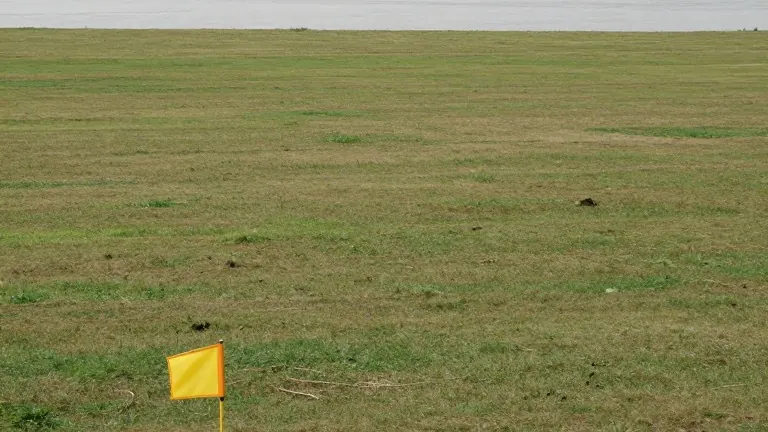
The University of Michigan is retaining a federally registered archeologist to survey a 144-acre parcel in Ypsilanti Township, following a state agency alert about potential indigenous remains.
By Grace Almasi ·
The University of Michigan is retaining a federally registered archeologist to survey a 144-acre parcel in Ypsilanti Township, following a state agency alert about potential indigenous remains.
The move responds to a September email from Scott Slagor, a cultural resource protection manager at the State Historic Preservation Office. Slagor warned that the proposed hyperscale data center site lies within a region described as highly archaeologically sensitive.
The state agency manages Michigan’s list of archaeological sites and restricts access to its data for federally qualified professionals. Slagor noted that the proposed location is on an undeveloped parcel adjacent to the Huron River. This geography, combined with a recorded cemetery on a neighboring property, increases the likelihood of discovering burials or artifacts.
In his email to Rob Green, the U-M project director, Slagor wrote, “You absolutely do not want to hit remains during construction.” He recommended that the university consult a qualified archeologist to conduct an assessment and advise on next steps. He also suggested reaching out to the Tribal Historic Preservation Offices of nearby tribes.
Green had initiated the inquiry after community engagement raised concerns about Native American burial grounds on the property. Green told Slagor in the email exchange that the university had not found direct evidence to support those claims. The emails were provided to reporters by Doug Winters, an attorney for Ypsilanti Township, and confirmed by a spokesperson for the Historic Preservation Office.
The university selected the parcel in August after receiving pushback from residents. Officials said the facility will support research to advance science and education. It will operate in partnership with the Los Alamos National Laboratory, an institution specializing in nuclear weapons research.
U-M has not broken ground on the site. A spokesperson stated that non-archaeological surveys found no evidence of artifacts or culturally sensitive materials at the location. The university’s October 30 statement said it is engaging the archeologist to conduct an official consultation with the state office and is reaching out to appropriate Tribal Nations.
Doug Winters told reporters that he did not trust the university to conduct a careful assessment voluntarily. Winters said, “We've known for many, many years this property, adjacent to the banks of the Huron River, was home to Native American tribes for centuries.” He added that the university was not going to come forward until the township pressed the issue.
In October, the Ypsilanti Township Board of Trustees and the United Tribes of Michigan both passed resolutions. The resolutions urged the university to hold off on construction until it completed detailed archaeological assessments. A spokesperson for the state office said the email exchange represents the full extent of current communication between the university and the agency.