California rejects $400 million billionaire tax
Voters on Monday turned down Proposition 40, a one-time wealth tax that opponents funded with nearly $400 million in advertising.
By Amit Chukwu ·
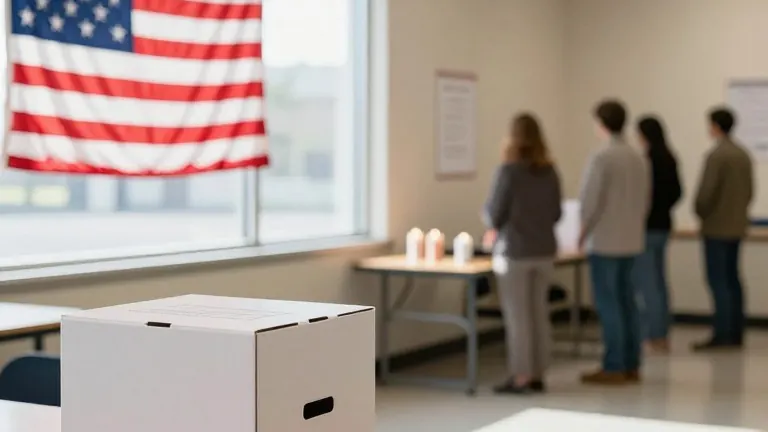
For California voters who have watched billions in campaign spending reshape local politics, the outcome of Monday’s election offers a new data point. Proposition 40, a one-time tax on the state’s wealthiest residents, failed to win a majority. The Associated Press projected the defeat late Monday, ending a high-stakes battle that consumed nearly $400 million in political spending.
The measure would have imposed a 1% tax on individuals with net worth exceeding $1 billion. The revenue was earmarked primarily for healthcare, with smaller allocations for food assistance and education. Despite a wave of Democratic victories in other races, the tax did not pass.
Gabriel Zucman, a professor of economics at UC Berkeley, attributes the failure to the sheer volume of money deployed against the measure. He notes that opponents spent over $300 million on advertisements, while proponents spent a negligible amount in comparison. Zucman argues that this disparity created a one-sided information environment for voters.
“Anyone who lives in California has been carpet-bombed by a deluge of ads,” Zucman said. “One can easily see how this could be pivotal in such a closely contested ballot.” He contends that the spending gap in this initiative fight was wider than in many candidate races, where both sides typically invest heavily.
Joshua Rauh, a finance professor at Stanford, offers a different explanation. He argues that the tax policy itself faced deeper resistance than advertising alone can explain. Rauh points to voting patterns in the Bay Area, where support for President Kamala Harris in 2024 was high, yet support for Proposition 40 was lower than in other parts of the state.
Rauh suggests that proximity to the wealthy made voters more skeptical. “The counties with the largest defections are actually the ones whose residents are most likely to know a billionaire, to work for one, or to have watched one move to Texas or Florida,” Rauh wrote. He believes the electorate is not yet ready to accept a new form of taxation on the rich.
The measure also lacked a unified Democratic front. Governor Gavin Newsom opposed the proposal, favoring a federal approach instead. Newsom argued that wealth is mobile and that the federal level is the appropriate arena for such taxes. The California Teachers Association also voted against the measure, arguing it provided insufficient long-term funding for schools.
The defeat leaves the wealth tax debate to the federal stage. Zucman expects the issue to gain traction in the new Congress, where many newly elected Democrats have campaigned on curbing billionaire influence. Rauh anticipates similar proposals in Washington but notes that President Trump’s presence in the White House limits the likelihood of immediate passage.
Legal hurdles also loom large for any future federal effort. Rauh warns that a federal wealth tax may be classified as a direct tax under the Constitution. Such taxes require apportionment based on state population, a requirement that legal scholars debate regarding its practicality for a tax on individual net worth.
The 16th Amendment exempted income taxes from this apportionment rule, but it does not explicitly cover wealth taxes. The next test for the movement may come in the 2028 election, where Rauh expects wealth taxation to be a central theme of political debate.