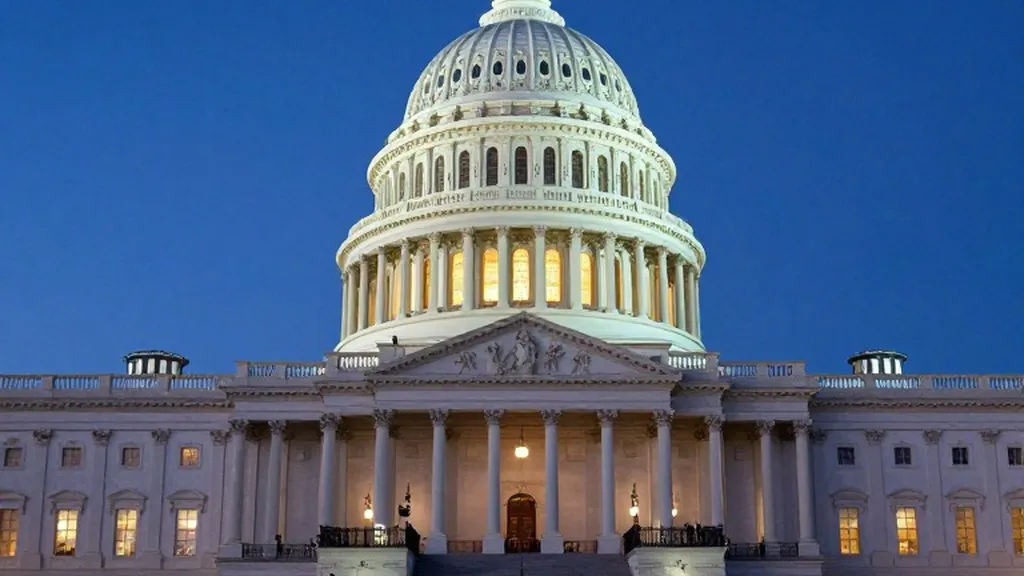
Speaker Johnson's Warning of Democratic Chaos Lands as GOP Holds Gavel
Despite the Speaker's dire predictions of a two-year nightmare, House Republicans retained control of the chamber by a slim margin.
By Amit Chukwu ·
Speaker Mike Johnson’s urgent warnings about the perils of a Democratic House concluded with a bittersweet victory for his party. In the final days of the 2026 midterm cycle, Johnson warned that a Democratic takeover would mark the beginning of a chaotic era defined by ideological rigidity and fiscal irresponsibility. He argued that the Republican majority had delivered on its promises to cut taxes and secure the border, positioning the election as a stark choice between stability and a far-left insurgency.
In a widely circulated USA Today op-ed published on October 30, Johnson painted a vivid picture of the political landscape. He described the Democratic Party as having bent the knee to its far-left wing, a shift he said had been driven by a socialist insurgency that overwhelmed the party's centrist wing. Johnson argued that even a narrow Democratic House would be held hostage by the Democratic Socialists of America, or DSA, whose platform calls for eradicating borders and abolishing the Senate.
To illustrate the potential consequences of this shift, Johnson pointed to the recent political turmoil in France. He described the violent riots and looting in the country as a dark harbinger of what could happen in the United States if Democrats took control. According to Johnson, the crisis in France was the result of decades of lax immigration enforcement and suffocating regulation that drove debt to a staggering 119 percent of GDP. He suggested that American voters should look to that example as a preview of the road ahead.
Johnson’s message was reinforced during appearances on Fox News, where he emphasized the contrast between Republican governance and the perceived radicalism of the opposition. Speaking with Laura Ingraham, Johnson warned that a Democratic Congress would bring chaos every day for two years. He noted that the party had taken a far lurch to the left, making their policies even more extreme than those of the Obama and Biden-Harris years. He urged voters to look beyond the polls, which he believed were underestimating Republican enthusiasm around the country.
The Speaker also highlighted the strategic insights of Democratic strategist James Carville, who admitted that Republicans should prefer to keep the House rather than see Democrats win it by a small margin. Johnson noted that Carville believed his own party would be held hostage by the DSA in such a scenario. This admission, Johnson argued, validated the Republican narrative that the current Democratic leadership was increasingly driven by a socialist cadre seeking to remake the American political system and end the free market.
Throughout the campaign, Johnson touted the record of the 119th Congress, which he described as a period of historic legislative effectiveness despite the slimmest House majority since the Great Depression. He pointed to the passage of the Working Families Tax Cuts, which provided an average $10,900 boost in take-home pay for a family of four through measures such as no tax on tips and overtime. The administration also cut $1.6 trillion in wasteful federal spending and launched the first-ever nationwide school choice program.
Johnson emphasized that Republicans had delivered more than one million private sector jobs to the economy while reshoring American manufacturing. He contrasted these achievements with the three government shutdowns forced by Democrats, including the longest in U.S. history. Despite these obstacles, he argued, the Republican majority had managed to pass significant legislation, including the HALT Fentanyl Act, which strengthened law enforcement's ability to combat the drug crisis.
The Speaker also discussed the importance of energy dominance, stating that the GOP was unleashing American energy production after years of Democratic efforts to choke off domestic output and phase out fossil fuels. He described the party's agenda as one that prioritizes individual liberty, limited government, and the rule of law. Johnson believed that voters were savvy enough to recognize the difference between common sense and what he called absolute crazy, a theme he repeated in his final campaign appearances.
As the results came in, the election proved to be a referendum on the president's second term, with voters expressing frustration over high prices and the war in Iran. While the AP approval poll showed that a significant portion of the electorate was dissatisfied with the country's direction, the Republican majority in the House was maintained. Johnson’s warnings about the DSA and the chaos of a Democratic Congress served as a rallying cry for a base that was eager to defend the legislative gains made over the past two years.
The Speaker's comments on the $5,000 Trump Dividend also played a role in the final stretch of the campaign. Johnson stated that congressional approval would be needed for the payments, which the president had promised if Republicans kept control of both chambers. He pledged that Congress would work to find consensus on the issue, a commitment that underscored the party's focus on delivering tangible economic benefits to voters. The retention of the House majority allows the Speaker to continue his work of implementing the America First agenda in the coming session.
With the chamber under Republican control, Johnson is set to continue his leadership in the House, where he has been praised by conservative leaders for his discipline and ability to unite a divided conference. The Speaker’s three-year tenure is marked by a record of results that he believes will resonate with the American people. As the new Congress prepares to convene, the focus will shift to the next set of legislative battles, with the Speaker’s warnings of a far-left opposition serving as a backdrop for the party's continued efforts to govern.