Cyan Lights Proposed for Driverless Cars
Federal regulators are suggesting a standardized blue-green glow to help other drivers identify vehicles operating in autonomous mode.
By Thabo Mokoena ·
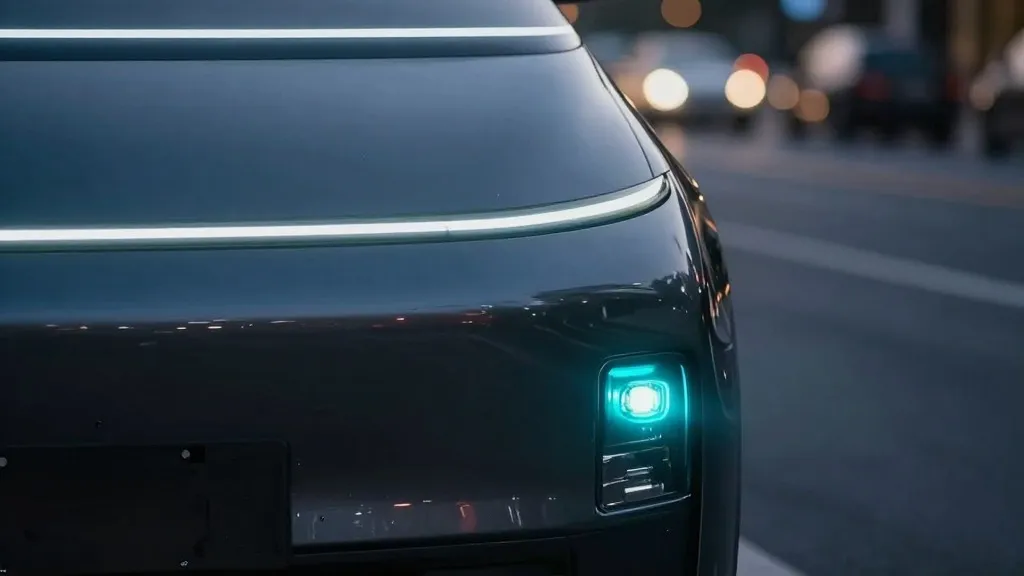
The National Highway Traffic Safety Administration has officially proposed a new visual cue for autonomous vehicles: a distinct cyan-colored light. This latest development marks the end of a long industry debate over how driverless cars should communicate their status to the rest of traffic. Rather than relying on flashing text or audio alerts, regulators are now looking to standardize a specific blue-green glow to indicate that a human is not at the wheel.
The proposal targets Federal Motor Vehicle Safety Standard No. 108, rewriting existing rules to accommodate vehicles without human operators. The primary goal is to create a clear, consistent signal for law enforcement and other road users. Cyan was selected because it fills a visual gap in current automotive lighting. Existing regulations already reserve red, amber, white, and flashing blue or red lights for functions like braking, turn signals, and emergency vehicles, meaning a new color is necessary to avoid confusion among drivers.
There is already some precedent for this approach in the industry. Mercedes-Benz previously received state-level approval to use turquoise lights on its Level 3 Drive Pilot vehicles, although the automaker later shifted its strategy toward a Level 2++ system. NHTSA aims to establish a national standard that allows major players, including Waymo, Nuro, Zoox, GM, and Mercedes, to adopt a uniform method for signaling autonomy. This consistency is intended to reduce ambiguity on the road for everyone sharing the space.
Under the new proposal, the cyan marker lamps would remain optional for manufacturers. However, if a company chooses to implement them, they must adhere to strict federal standards regarding color, brightness, and placement. This prevents a fragmented landscape where different robotaxi companies use varying colors or intensities, ensuring that any driver who sees the light knows exactly what it means. The rule also proposes removing physical requirements that are irrelevant for human-free designs, such as internal hazard switches, manual beam shifters, and turn levers.
The agency is also updating technical specifications to better suit modern engineering. This includes revising the 12.8-volt testing standard to align with contemporary LED architectures and reconsidering rules about the vertical positioning of high-beam and low-beam lights. These changes are part of a broader Department of Transportation initiative to streamline the deployment of autonomous vehicles, making it easier for automakers to build cars without traditional controls like steering wheels and pedals.
Despite these forward-looking changes, regulators continue to enforce current rules strictly. Last month, NHTSA launched an audit query into the Tesla Cybercab to review the technical data behind its certification. The focus of that inquiry is the vehicle’s lack of sideview mirrors, pedals, and a steering wheel, all of which are currently mandated under existing safety standards. This dual approach highlights the ongoing tension between modernizing regulations for autonomous technology and maintaining rigorous oversight of vehicles already on the market.
Source: The Verge