Alaska elects first Democratic governor in nearly three decades
Jonathan Kreiss-Tomkins wins the Alaska governorship, adding to a wave of Democratic victories in state and federal races following the midterms.
By Grace Almasi ·

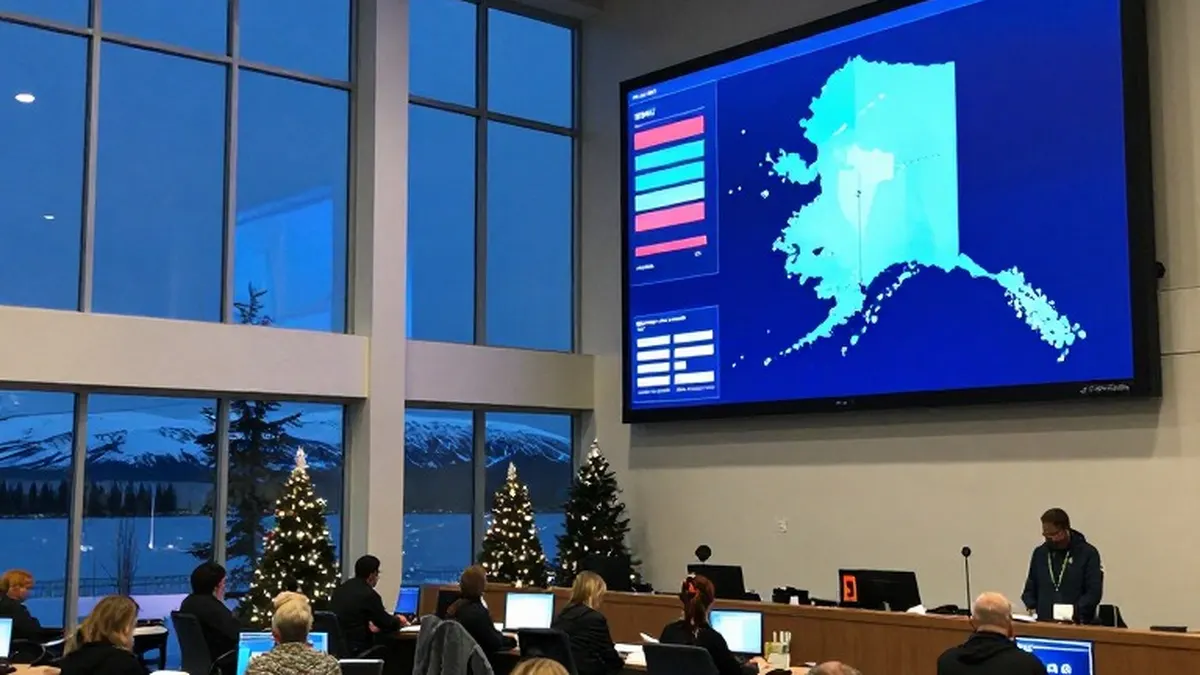
Jonathan Kreiss-Tomkins has been declared the winner of the Alaska governor’s race, marking the first time a Democrat has held the office since 1998. The Associated Press called the election on Friday, ten days after the polls closed, confirming a significant shift in the state’s political landscape. Kreiss-Tomkins, a former state legislator, defeated three Republican opponents, including a candidate who had received the backing of President Donald Trump.
The 37-year-old, widely known by his initials JKT, mounted a political comeback three years after leaving the Alaska house of representatives. Throughout his campaign, he traveled extensively across the state to build support by focusing on economic stability and promising a new direction for state governance. His platform emphasized addressing affordability, ensuring full funding for public education, and requiring all oil and gas producers to pay corporate income taxes.
Kreiss-Tomkins also advocated for a temporary pause on new datacenter construction until state lawmakers established clear regulations for their development. During the race, he sharply criticized outgoing Republican governor Mike Dunleavy, arguing that Alaska had become broken during the outgoing leader's eight years in office. One of his key points of contention was the deterioration of the state’s ferry system, which he said had been left in disarray with drastically reduced service to numerous communities.
The ferry network is a critical transportation link for communities in south-east Alaska that lack road connections and have limited access to air travel. Despite his strong criticism of the previous administration, Kreiss-Tomkins positioned himself as a collaborative leader. He pledged to assemble a cabinet that includes members from the Democratic Party, the Republican Party, and independents.
Alaska utilizes a ranked-choice voting system, which allows voters to rank candidates by preference and permits multiple candidates from the same party to run against one another. However, Kreiss-Tomkins secured an outright victory by winning more than 50 percent of first-choice votes, avoiding the need for additional rounds of vote counting. “Alaskans are hungry for change,” he said. “We’ve been running the same campaign since we launched in February, and I don’t take anyone’s vote for granted.”
This victory adds to a growing list of Democratic gains nationwide, bringing the party’s total to 30 US governorships. Democrats have also taken control of governor’s offices in several other longtime Republican strongholds, including Iowa, Georgia, Ohio, and Texas. The Alaska result comes just days after Democrats scored another major gubernatorial win in conservative Kansas, where state senator Cindy Holscher narrowly defeated Republican state senate president Ty Masterson.
In Kansas, Holscher highlighted Masterson’s ties to President Trump, who had endorsed the Republican candidate. Holscher maintained that she would remain willing to cooperate with the Trump administration on issues where common ground could be found. The back-to-back victories in Alaska and Kansas underscore the scale of the Democratic gains in what has become a nationwide electoral shift following the midterms on November 3.
The party’s long-anticipated blue wave has materialized, with Democrats flipping eight seats in the US Senate and gaining more than two dozen seats in the House. These gains have handed Democrats a strong majority in Congress for the latter half of Trump’s second presidency. The shift in power extends to state governments as well, with Democrats now controlling a majority of governorships for the first time since 2010.
In Alaska, the US Senate race remains close, with Democrat Mary Peltola leading Republican incumbent Dan S Sullivan as of Saturday, according to Alaska Public Media. This lead has prompted media outlets to characterize the Senate race as leaning Democratic. In Texas, Gina Hinojosa became the first Democrat elected governor in 35 years and the state’s first Hispanic governor.
A major factor in the Republican Party’s midterm defeat is the unpopularity of President Trump. Most Republican lawmakers continued to support him even as polls indicated that voters did not support his immigration crackdown, tariffs, the war with Iran, or his signature domestic policy bill. These results signal a dramatic change in the balance of power in Washington and across state capitals.