Iran Chemical Threat: US Divided on Israeli Intel
Washington officials debate the credibility of Israeli warnings while preparing for a potential strike on Iran next week.
By Renata Mehta ·
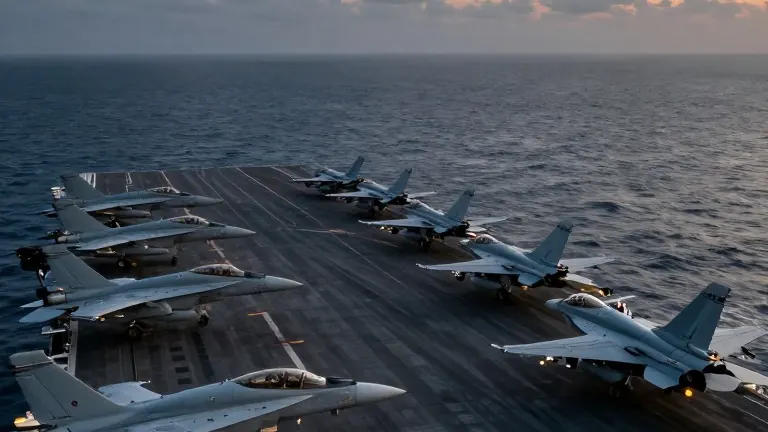
The United States and Iran are negotiating a diplomatic breakthrough while simultaneously preparing for resumed hostilities, according to senior American officials. US Central Command has a plan for an attack on Iran that could be executed as early as November 4, the day after the US midterm elections. Three American aircraft carriers are currently positioned in the region, and the preferred operational window for a strike is expected to be brief.
The military buildup is occurring alongside new intelligence shared by Israel. Israeli intelligence officials told their American counterparts that Iran is rapidly advancing technology to mount chemical weapons on missiles or smuggle them into Israel or another country. Some senior US officials received this information with concern. Other officials expressed deep skepticism, viewing the warnings as part of a pressure campaign by Prime Minister Benjamin Netanyahu's government to convince the Trump administration to resume large-scale fighting.
Gulf officials also questioned the Israeli intelligence. A regional official told the newspaper that Israel presented assessments suggesting Iran was working to make its chemical weapons operational but did not share supporting evidence. Gulf governments regarded the claims as lacking seriousness. For some American officials, the warnings have revived memories of the faulty intelligence surrounding Iraq's weapons of mass destruction in 2002. At that time, US agencies presented a firm assessment that Iraq possessed such weapons, although the country had largely abandoned its programs.
There is little disagreement within the American intelligence community that Iran is developing chemical weapons. The central dispute concerns whether Iranian leaders would actually use them if Iran is not attacked again. Experts and American officials noted that mounting a chemical weapon on a ballistic missile is not particularly difficult. However, ensuring the effective dispersal of the chemical agent is more complicated. Smuggling a bomb across a border also presents difficulties, while the use of a drone remains another possibility.
Despite the warnings, preparations for responding to chemical weapons attacks are not a central component of Home Front Command exercises taking place across Israel this week. Two Home Front Command officials said there had been no widespread reminders distributed to officers or the public regarding protective instructions. The Israel Defense Forces declined to comment. The intelligence was shared as the United States and Iran explore the possibility of a diplomatic solution.
Diplomats are attempting to formulate an agreement that would reopen the Strait of Hormuz and address Iran's nuclear program. The military buildup could also serve to support the diplomatic effort. US intelligence agencies assess that the threat to Americans in the Middle East is at its highest level since the war began in February. Intelligence collection was intensified after an Iranian plot to attack a base in Britain was uncovered. A warning memorandum regarding potential Iranian attacks was sent to senior administration officials on October 23.
American allegations regarding an Iranian chemical weapons program date back decades. In 2003, Iran acknowledged that it had developed chemical capabilities during the Iran-Iraq War but claimed that it subsequently dismantled them. Tehran denies possessing chemical weapons and has previously described such accusations as psychological warfare. Dana Stroul, a former senior Pentagon official, said it has been known for more than two decades that Iran has been stockpiling components for chemical weapons. She warned that Tehran could feel existential pressure and potentially cross the threshold into using such weapons offensively.
A spokesperson for Netanyahu's office said Israel closely monitors every threat posed by the Iranian regime. The White House did not respond to requests for comment, but an American official said Trump would defend the United States and its allies against any potential threat. Netanyahu's efforts are linked to his political situation following the Israeli elections, where he failed to secure a clear path toward forming a government. Commentators suggested he might attempt to use a national security emergency to pressure opposition leaders into joining a coalition.
Source: The Jerusalem Post