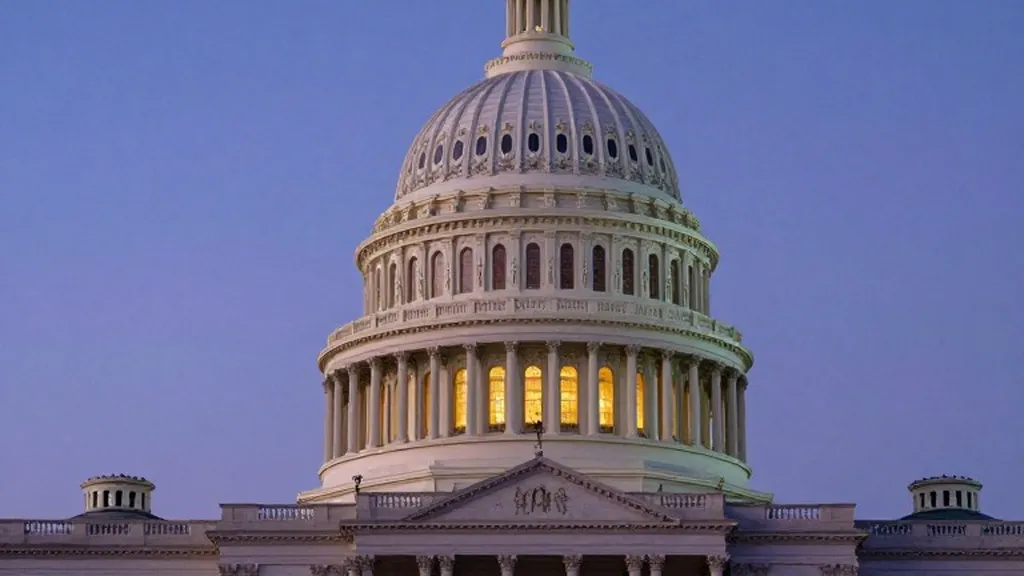
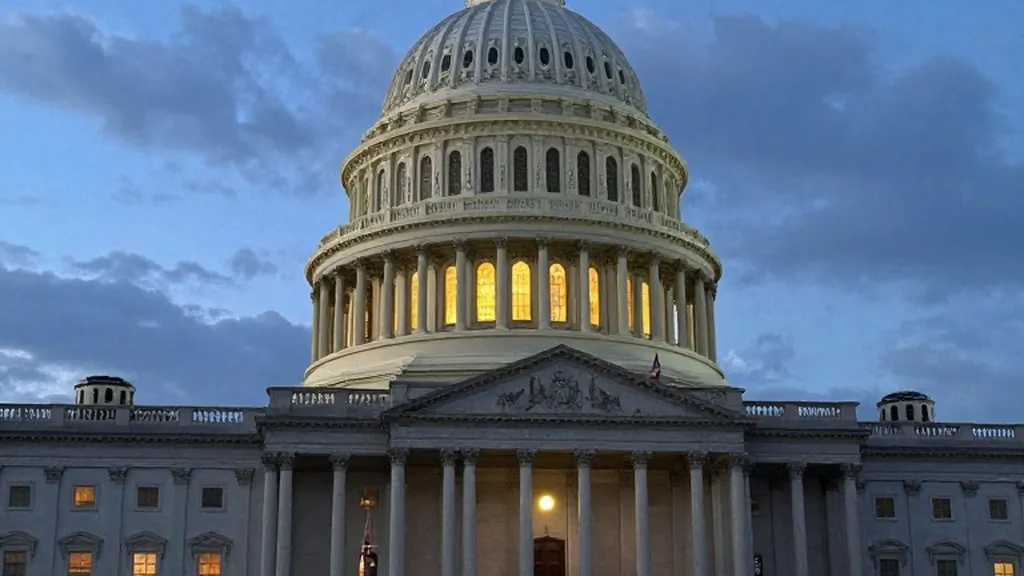
Johnson's 'Chaos' Warning Rings True as Democrats Seize Congress
Speaker Mike Johnson's dire predictions of a Democratic takeover have materialized in a historic midterm rout.
By Grace Almasi ·
Speaker Mike Johnson spent the final weeks of the campaign warning that a Democratic-controlled House would trigger immediate turmoil. In a USA Today op-ed published on October 30, Johnson described the coming shift as a moment where the party would be held hostage by the DSA. He pointed to France as a dark harbinger of what could happen in America, citing violent riots and looting as evidence of where far-left policy leads. Johnson argued that the chaos unfolding in France was not just a local issue but a preview of the domestic instability that would follow a Democratic win.
Those warnings gained urgency during his appearance on The Ingraham Angle on Fox News. Johnson stated that if Democrats took control, it would be chaos every day for two years in the next Congress. He emphasized the slim margins by which the previous Republican majority had survived, noting that in 2024, ten House races were decided by 6,000 votes or less. He urged voters to remember that every single vote would matter in the upcoming contest, framing the election as a choice between common sense and absolute crazy.
Johnson also invoked the testimony of Democratic strategist James Carville, who admitted he would prefer Republicans keep the House rather than have Democrats win it by a small margin. Johnson highlighted Carville's line that the party would be hostage to the DSA in such a scenario. This comment resonated with conservative voters who feared that even a narrow Democratic victory would empower the party's socialist wing to dictate the legislative agenda. Johnson used this admission to bolster his argument that the stakes were higher than a simple change of leadership.
In his op-ed, Johnson detailed the legislative record of the 119th Congress, claiming that Republicans delivered historic results despite facing three government shutdowns, including the longest in U.S. history. He pointed to the Working Families Tax Cuts, which he said provided an average $10,900 boost in take-home pay for a family of four. This included tax relief on tips and overtime, a larger standard deduction, and expanded child tax credits. He argued that these measures were tangible evidence of Republican competence in a time of economic pressure.
The Speaker further claimed that his party cut $1.6 trillion in wasteful federal spending and unleashed American energy dominance. He stated that more than one million private-sector jobs had been added to the economy as a result. Johnson noted that American manufacturing was coming home due to pro-growth policies that worked in concert with President Donald Trump's reshoring agenda. He presented these figures as proof that the Republican approach was building the nation while the Democrats sought to tear it down.
The election results on Tuesday, November 3, confirmed the scope of the shift Johnson had warned about. Democrats took control of both the U.S. House and the Senate, ending the Republican majority that Johnson had led for three years. With results reported as of 4 p.m. ET on November 6, Democrats held at least a 250-157 majority in the House and a 54-44 majority in the Senate. This margin was significantly larger than the narrow Democratic win Johnson feared, suggesting that the party would face a powerful legislative opposition rather than a fragile coalition.
The victory was not limited to Congress. Democrats also gained control of state governments across the country, winning trifectas in at least six states where they previously shared power with Republicans. These wins included the battleground states of Michigan, Minnesota, Pennsylvania, Nevada, and Wisconsin. In Arizona, Democrats secured their first trifecta since 1966, taking both legislative chambers and retaining the governor's office. This broad sweep indicated a national mood that aligned with Johnson's assessment that voters were ready for a dramatic change in direction.
Johnson's specific warnings about the DSA gaining power appear to have been prescient as the new Democratic leadership takes shape. The party's platform, which Johnson criticized for calling for the eradication of borders and prisons, now has a clearer path to implementation. With a substantial majority in both chambers, Democrats can move legislation forward with less reliance on bipartisan consensus. This aligns with Johnson's prediction that the new Congress would be driven by the party's far-left wing rather than its centrist elements.
The contrast between the Republican record and the Democratic agenda was a central theme of the campaign. Johnson emphasized that Republicans had delivered on their promises to lower costs and cut taxes. He claimed that the largest tax cut in U.S. history had been passed, heading off what he called the largest tax hike ever. He also pointed to the secured border and the lowest violent crime rate in 126 years as key achievements. These claims were repeated in his interviews and op-ed, serving as a benchmark against which the new Democratic leadership will be measured.
As the new Congress prepares to convene in January 2027, the focus will shift to how the Democratic majority manages the legislative process. Johnson's warning of daily chaos may serve as a baseline for expectations, even as the new Speaker and leadership team work to establish their own agenda. The significant margin of victory suggests that Democrats have the votes to pass major legislation, but the political dynamics of the new majority will determine whether the period is characterized by the turmoil Johnson predicted or a more stable governing period.
The election results stand as a definitive rebuke to the Republican majority. Democrats picked up at least 43 House seats and seven Senate seats, all previously held by Republicans. This shift in power marks one of the largest swings against a president's party in recent history. For Johnson, who served as Speaker during one of the smallest House majorities in history, the loss represents the end of an era defined by intense legislative battles and a clear contrast in visions for America.