Merz Demands Ukraine Funding In EU Budget
Germany will withhold support for the 2028 to 2034 fiscal plan unless all members agree to pay for Kyiv aid.
By Renata Mehta ·
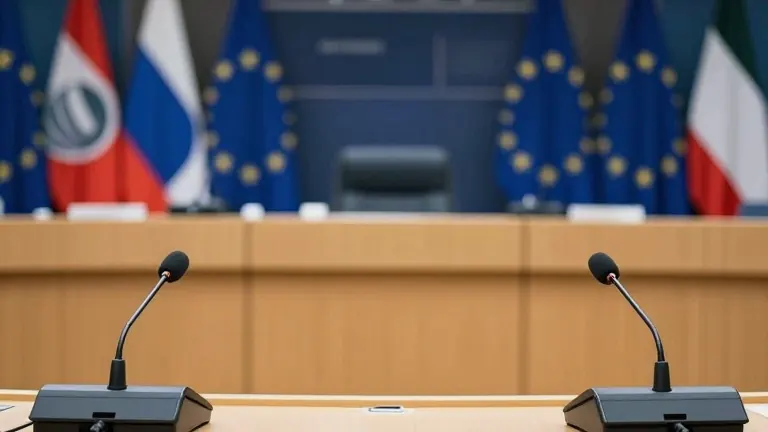
German Chancellor Friedrich Merz informed European Council President Antonio Costa that Germany will not support the European Union's next multi-year budget unless all member states commit to funding Ukraine. This position, outlined in a letter to Costa, ties the bloc's 2028 to 2034 financial framework directly to collective support for Kyiv.
Merz reiterated this stance on November 10 during a press conference with Hungarian Prime Minister Peter Magyar. He responded to recent criticism from Slovak Prime Minister Robert Fico, who called the German threat to block the budget an act of blackmail. Fico argued the move was designed to force members to commit to aid starting in 2027.
The German leader framed the issue as a shared European duty rather than an individual national burden. He stated, "This is a common European task, not a matter for individual member states but a shared responsibility of the European Union." Merz noted that this approach aligns with how the bloc has handled its policy toward Ukraine in recent years.
Citing data from the end of last year, Merz pointed out that 24 of the 27 member states had already indicated willingness to provide 90 billion euros to Kyiv. Despite this majority, he argued that the current path is not optimal. He acknowledged that at least four nations hold differing views on the matter.
Merz addressed the domestic political tensions in Hungary directly. He said, "Péter Magyar and I spoke quite openly about the fact that there is also an issue of domestic politics in Hungary, which we of course respect." However, he urged Magyar to recognize Germany's position as the largest net contributor to the EU budget and the biggest source of aid for Ukraine.
The Chancellor emphasized the financial disparity between the two nations. Germany pays more into the EU than it receives, while Hungary receives more than it contributes. Merz argued that the largest contributor must settle this fundamental question collectively with its partners.
Hungary, Slovakia, Bulgaria, and Czechia have signaled reluctance to contribute further to aid for Kyiv. Last year, Hungary, Slovakia, and Czechia secured an exemption from covering the interest on the EU's 90 billion euro loan for Ukraine's 2026 and 2027 budget and defense needs.
More Politics · World news · Report a business · Got a Story?