Record spending shapes 2026 race as Republicans outspend Democrats at committee level
The 2026 midterms are projected to be the most expensive in history, with Republican committees leading in fundraising while Democrats maintain a candidate-level advantage.
By Grace Almasi ·

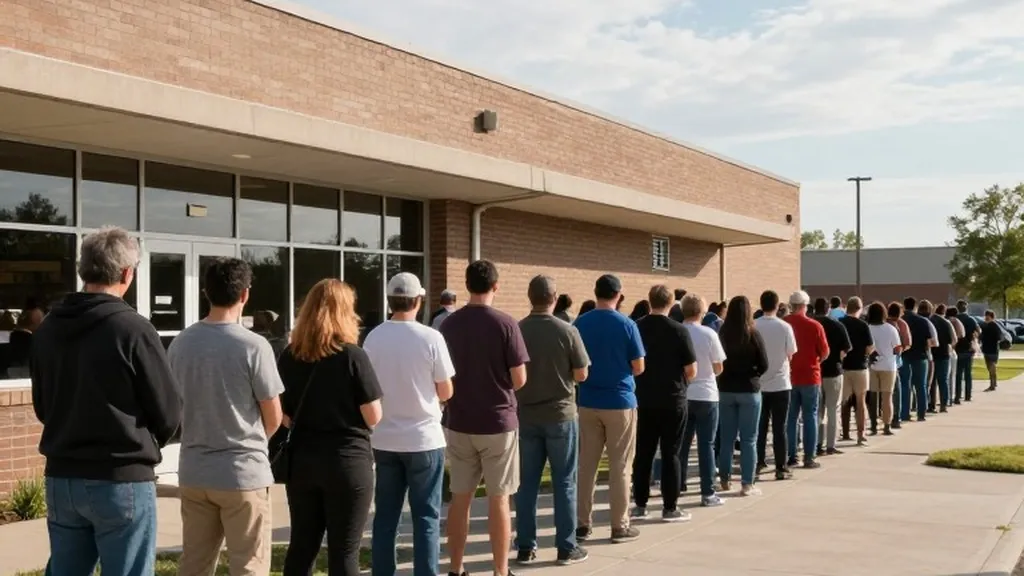
Election Day arrives on Tuesday, November 3, 2026, with the financial scale of the contest already setting a historic record. The 2026 elections are expected to be the most expensive in U.S. history, a surge driven by intense competition for control of Congress halfway through President Donald Trump's second term. This unprecedented spending reflects the high stakes of the midterm, where the results will determine which party controls the legislative agenda for the president's final two years. As polls open across the country, the flow of money has become as critical a metric as voter turnout in shaping the narrative of the day.
At the committee level, Republican organizations have outraised and outspent their Democratic counterparts. This financial edge has been bolstered by support from Trump-affiliated groups and significant contributions from Elon Musk. The Associated Press analysis of AdImpact data highlights the strategic focus of these funds. Republicans have directed the majority of their general election television advertising toward states and districts that President Trump won in 2024. This targeted approach aims to secure the base of the president's party in key legislative districts.
The data reveals that 88.1 percent of Republican general election TV ad spending went to areas where Trump carried the state in the previous presidential election. This concentration of resources was particularly pronounced in districts where the president won by ten points or more. In those specific high-margin districts, Republicans spent more than $850 million on television advertisements. This figure underscores the heavy investment made to defend Republican-held seats and consolidate power in areas where the party's presidential candidate performed strongly two years ago.
Despite the committee-level advantage, the picture is more nuanced at the candidate level. Democrats have managed to outraise their opponents in individual races. This suggests that while Republican committees have the broader war chest, Democratic candidates have been successful in mobilizing funds for their specific campaigns. This dual dynamic creates a complex financial landscape where party committees and individual candidates may be pulling in different directions or focusing on different strategic priorities as the day unfolds.
The high cost of the election is occurring against a backdrop of significant economic anxiety among voters. The Associated Press describes the election as a referendum on the president's second term, noting that many voters are struggling with high prices. A recent AP-NORC poll found that only 25 percent of U.S. adults approve of the president's handling of the economy. This economic discontent is a driving force behind the spending, as both parties attempt to craft messages that resonate with households feeling the strain of inflation and rising costs.
Republican strategy has focused heavily on turnout to protect their majorities. RNC Chairman Joe Gruters stated that everything depends on turnout, emphasizing that if the party turns out its voters, it will win. This message aligns with the massive advertising spend in Republican-leaning districts. The goal is to ensure that the base voters who supported Trump in 2024 return to the polls in sufficient numbers to maintain or expand the party's presence in the House and Senate. The financial resources are being used to reinforce this message in the final days before the votes are cast.
Democrats, meanwhile, are leveraging their candidate-level fundraising to highlight the cost of living and the need for change. DCCC Chair Rep. Suzan DelBene noted that the American people are angry and want change. This sentiment is being amplified through targeted campaigns in the 46 battleground House districts identified by Ballotpedia. The party is focusing on districts where the economic pain is most acute, aiming to convert dissatisfaction with the current administration into legislative victories. The candidate-level fundraising edge allows for more personalized and localized messaging in these critical races.
The allocation of funds also reflects the geographic realities of the election. With new congressional maps in place in states like Florida, Texas, and North Carolina, the spending patterns are adapting to the redistricting. The 850 million dollar figure in high-margin Trump districts indicates a defensive posture in areas where the Republican base is strongest. However, the competitive nature of the Senate races, with thirteen battlegrounds, requires additional spending in states where the margin of victory in 2024 was much tighter. This balanced approach to spending is designed to maximize the number of seats won across both chambers.
As voters head to the polls, the impact of this record spending will be felt in the final messages delivered by both parties. The financial war has set the stage for a highly contested election, with every dollar aimed at influencing the outcome in specific districts and states. The interplay between committee spending and candidate fundraising will determine which messages reach the most voters in the crucial final hours. The historic nature of the spending underscores the importance of the day, as the nation decides the direction of its government for the next two years.
The financial data provides a clear snapshot of the strategies employed by both parties. The Republican focus on high-margin districts and the Democratic focus on candidate-level fundraising highlight the different tactical approaches to the same goal. As the day progresses, the effectiveness of these strategies will become apparent in the early returns and the overall turnout numbers. The record spending ensures that the election is being fought with every resource available, setting a new benchmark for future midterm contests.
The Associated Press analysis confirms that the 88.1 percent figure for Republican TV ad spending in Trump 2024 states is a key indicator of the party's defensive strategy. This focus on securing the base is crucial for maintaining the slim majorities in the House and Senate. The Democrats' ability to outraise candidates despite the committee deficit shows a resilient grassroots effort. The combination of these financial trends paints a picture of a fiercely contested election where every seat is up for grabs and the money is flowing in unprecedented amounts to secure them.