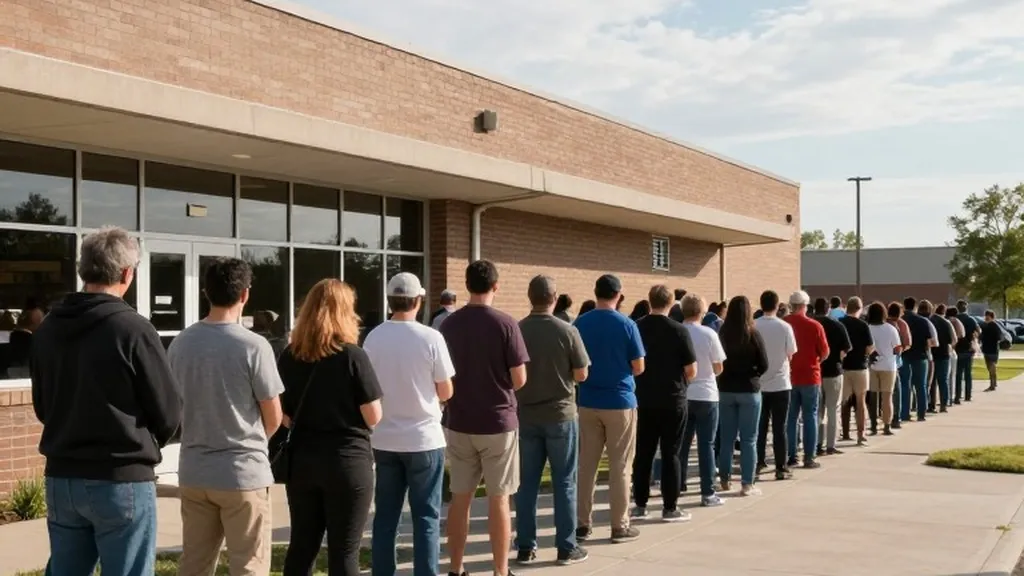
Senate math: 35 seats, 13 battlegrounds, and the path to control
With 35 seats on the ballot, Republicans must lose no more than two to keep their majority, while Democrats target specific races in red and blue states to flip the chamber.
By Grace Almasi ·
The United States Senate is the central focus for many conservative voters today as 35 of the 100 seats come up for election. According to Ballotpedia, this cycle includes 33 regular elections and two special elections for the remainder of the terms held by Marco Rubio of Florida and JD Vance of Ohio. Republicans currently hold 53 seats, while Democrats hold 45, with two independents who caucus with the minority party. The arithmetic of the chamber dictates that Republicans can afford to lose only two seats to maintain their majority. Conversely, Democrats require a net gain of four seats to seize control of the legislative body.
Among the 33 regular seats up for grabs, 20 are currently held by Republicans and 13 by Democrats. This structural advantage gives the GOP a cushion, but it is not guaranteed to hold. Eleven senators are not seeking reelection, creating open seats that often present opportunities for the opposing party. Ballotpedia identifies 13 specific Senate races as battlegrounds where the outcome is particularly close or competitive. These races span a diverse geographic range, from the Mountain West to the New England coast, and include both incumbent and open-seat contests.
Republican incumbents face stiff challenges in several of these key states. In Georgia, Senator Jon Ossoff is seeking reelection in a state where Donald Trump won by 2.2 percent in 2024. In Maine, Senator Susan Collins, a Republican, is defending her seat in a state that voted for Kamala Harris by 6.9 percent. The Associated Press notes that economic strain and tariffs have made Maine a competitive environment. In Kansas, Senator Roger Marshall faces a rematch in a state that has become central to the fight for Senate control, despite Trump winning the state by 16.2 percent in the last presidential cycle.
Open seats present distinct dynamics for both parties. In Iowa, former Senator Joni Ernst is retiring, leaving a seat in a state Trump won by 13.2 percent. Cook Political Report and other rating services currently view this race as a toss-up or a tilt toward Republicans. In Michigan, former Senator Gary Peters is not running, and the state voted for Trump by a narrow 1.4 percent margin. The race is rated as a toss-up to lean Democratic by several major analysts. In North Carolina, former Senator Thom Tillis is retiring after clashing with the president, creating an open seat in a state Trump won by 3.3 percent.
Special elections add another layer of complexity to the tally. In Florida, Ashley Moody is running to fill the remainder of Marco Rubio's term. Trump won Florida by 13.1 percent in 2024, providing a strong baseline for the Republican candidate. In Ohio, Jon Husted is seeking the remainder of JD Vance's term. The state voted for Trump by 11.2 percent, and the race is currently seen as competitive but favorable to Republicans. These two seats are crucial for Republicans to lock in their majority, as losing both would force them to win back ground in other states to maintain control.
Rating services such as Cook, Decision Desk, Inside Elections, and Sabato's Crystal Ball provide varying assessments of these 13 races. Maine is considered a toss-up across all four major rating services. Iowa is seen as a toss-up or a tilt toward Republicans. Kansas is rated as a toss-up to lean Republican. Alaska, where the incumbent is Dan Sullivan, is viewed as a toss-up to lean Democratic. Michigan and Georgia are rated as toss-up to lean Democratic or likely Democratic. These ratings reflect the tight margins in the 2024 presidential results and the current polling data, indicating that small shifts in voter turnout could determine the final outcome.
The Associated Press describes the election as a referendum on President Trump's second term, with voters struggling with high prices and angry over an unpopular war with Iran. AP-NORC polling indicates that 35 percent of U.S. adults approve of Trump's job performance, while only 25 percent approve of his handling of the economy. About seven in 10 say the country is heading in the wrong direction. These sentiments are influencing how voters approach the Senate races, with many looking to hold the president's party accountable for economic conditions and foreign policy decisions.
Republican leadership is focused on turnout as the primary factor in retaining their majority. RNC Chairman Joe Gruters stated that everything depends on turnout, asserting that if they turn out their voters, they win. This strategy is particularly important in states like Alaska and Florida, where Republican turnout is expected to be high. In contrast, Democrats are cautiously optimistic about their chances in states like Georgia and Michigan, where they hope to exploit dissatisfaction with the administration's economic record. The outcome of these 13 races will largely determine whether Democrats can achieve the net gain of four seats necessary for a majority.
Wall Street is also watching the Senate races closely, as Reuters notes that results could add to investor concerns about AI spending and debt ceiling negotiations. A change in Senate control would likely lead to investigations and possible impeachment proceedings if Democrats win, according to the AP. House Democratic Leader Hakeem Jeffries has outlined a 100-day agenda on the cost of living and oversight, signaling a focus on economic issues if his party gains power. A strong Democratic night would also boost potential 2028 candidates such as Gavin Newsom, JB Pritzker, and Pete Buttigieg, while complicating the path of Vice President JD Vance.