Swift Observatory Ends 22-Year Mission After Reentry
The telescope, launched in 2004, fell into Earth's atmosphere near Indonesia following a failed private rescue attempt earlier this year.
By Renata Mehta ·
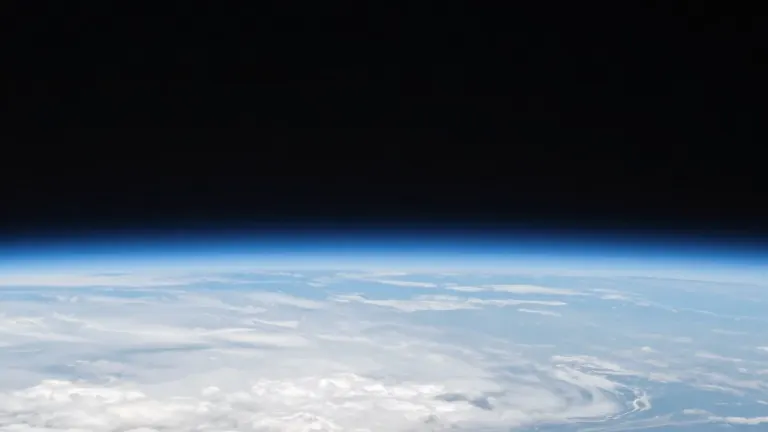
NASA's Swift Observatory reentered Earth's atmosphere on Wednesday, concluding a 22-year mission to track gamma-ray bursts and stellar explosions. The U.S. Space Force confirmed the spacecraft's descent near Indonesia, a trajectory caused by increased solar activity over the past several years that thickened the upper atmosphere and accelerated the orbital decay.
The loss follows a high-profile failure by a private firm contracted to save the aging hardware. Katalyst Space, hired by NASA, launched a three-armed robotic craft in July to boost Swift's orbit. The vehicle malfunctioned after launch and crashed in September, less than three months before Swift's final plunge. It remains unclear how much of the 1.5-ton spacecraft burned up, though NASA expects denser components to survive the reentry.
Swift launched in 2004 with a planned two-year lifespan. It operated for 11 times longer than designed, observing thousands of cosmic events. The telescope served as a rapid-response tool, alerting other observatories to point their instruments at new explosions for deeper analysis. Its retirement marks the end of a long-standing asset for studying high-energy phenomena.
NASA is now turning its attention to the Hubble Space Telescope, which faces a similar orbital decline. Launched in 1990, Hubble is expected to reenter by the mid-2030s. The agency is soliciting proposals from the private sector to determine if companies can boost Hubble's orbit, upgrade its systems, or guide a controlled reentry. Any intervention must be completed by 2032.
Nicky Fox, NASA's science mission chief, noted that the agency has more time to evaluate options for Hubble than it did for Swift. Unlike the rushed Swift contract, the Hubble decision allows for a broader assessment of cost and technical feasibility. The space agency is currently reviewing industry interest in these potential missions.
NASA Administrator Jared Isaacman stated that Hubble still has important science ahead of it. He said the agency should look at every reasonable opportunity to keep the telescope delivering for as long as possible. The next step involves analyzing the bids and technical plans submitted by private firms in response to the agency's request for input.
More Business · Customer Complaints · Report a business · Got a Story?