Clocks Turn Back Nov. 1
The time change coincides with Halloween, a rare alignment not expected until 2036.
By Grace Almasi ·
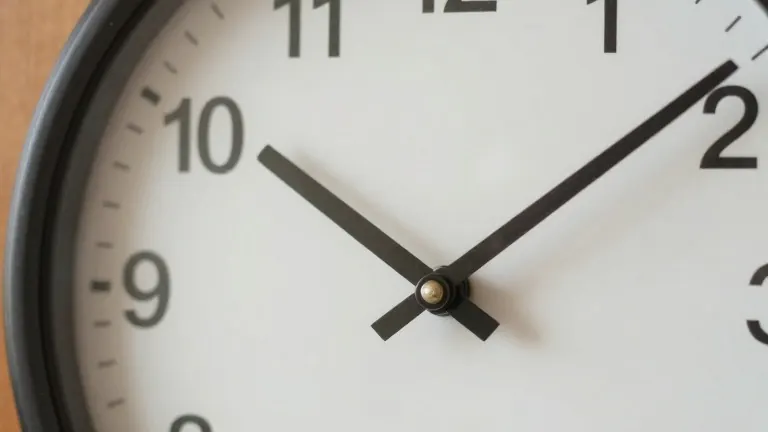
U.S. clocks will turn back one hour at 2 a.m. local time on Sunday, Nov. 1. The shift marks the end of daylight saving time. Residents will gain an extra hour of sleep. This specific overlap with Halloween will not recur until 2036.
Three key points define the current situation. First, the federal standard for the time change remains in effect. Daylight saving time begins on the second Sunday in March and ends on the first Sunday in November. Second, legislative action to alter this schedule has stalled in the Senate. The House of Representatives passed the Sunshine Protection Act in July. The vote was 308 to 117. Third, health experts link the biannual time change to disruptions in human biology. Research associates the March spring forward with a rise in fatal car accidents, heart attacks, and strokes.
The Uniform Time Act established the current federal framework in 1966. President Lyndon B. Johnson signed the legislation. It standardized time zones after local governments previously set their own schedules. That fragmentation once left Boston, New York, and Philadelphia on different times than Washington, D.C., and Cleveland for five weeks each year. President George W. Bush extended the period of daylight saving time in 2005 through an energy bill. The current four-week extension has been in place since 2007.
Not all regions observe the shift. Hawaii and Arizona do not change clocks. The Navajo Indian Reservation in Arizona is the sole exception within that state. U.S. territories including Puerto Rico, Guam, American Samoa, and the U.S. Virgin Islands also remain on standard time year-round.
States can currently opt out of daylight saving time by passing their own laws. The federal government can also repeal the practice entirely or make it permanent. The Sunshine Protection Act aims to let states make the change permanent while allowing them to opt out. President Donald Trump supported the measure. He cited economic benefits for tourism and outdoor recreation. Critics raised concerns about potential health impacts. The House Energy and Commerce Committee approved the bill 48 to 1 in May. The legislation now waits in the Senate for a vote.
The practice of adjusting clocks for daylight saving time has a long history in the United States. The government first enacted it in 1918 to extend summer sunlight. It was repealed after World War I, reinstated during World War II, and repealed again before the 1966 standardization. A similar experiment in the 1970s lasted less than a year following public outcry.
Source: KNBC