Damascus and Amman trade conflicting accounts over Jordanian strikes that killed Syrian civilians
Jordan says its air strikes on southern Syria killed more than 20 ISIL fighters in retaliation for a church attack, but Syria denies any coordination as anger grows over civilian deaths.
By Grace Almasi ·
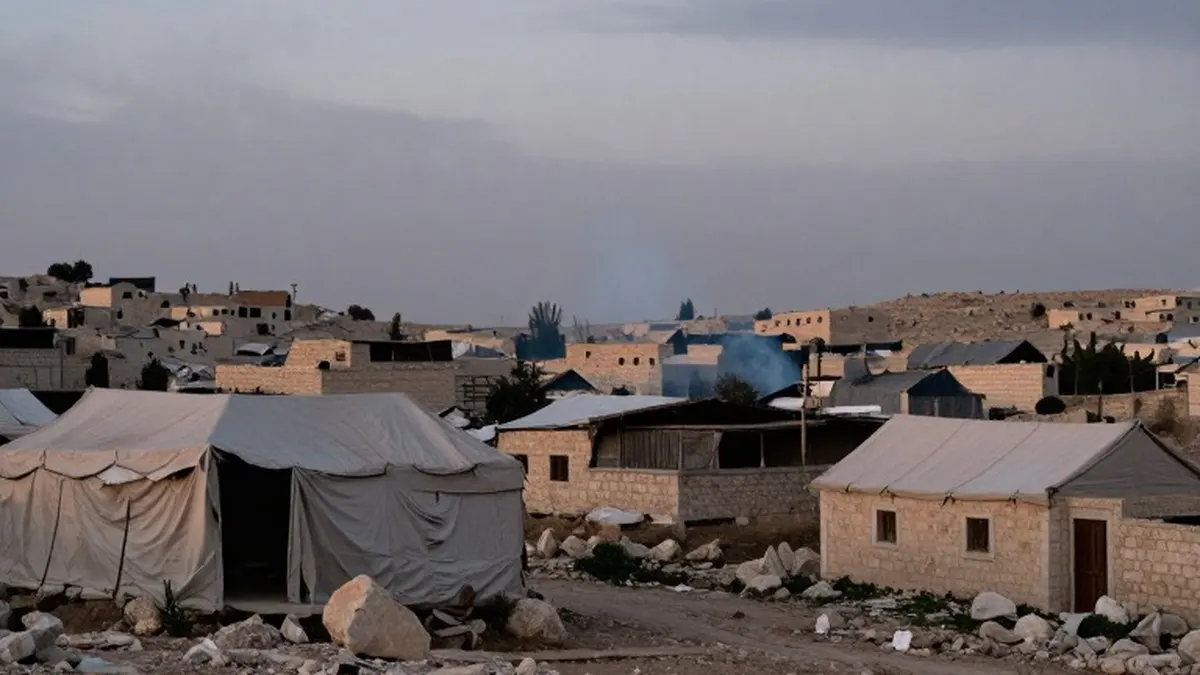
Public anger is mounting in Syria after Jordanian air strikes on the southern regions of Deraa and Suwayda on Monday evening, with Damascus and Amman offering sharply conflicting accounts of whether the operation was coordinated.
Jordan said its air force killed more than 20 ISIL (ISIS) fighters in retaliatory strikes on what it called "dens of terrorist organisations in southern Syria", saying the targets were linked to suspects accused of being behind last week's attack on a Greek Orthodox church in the kingdom, which was claimed by the group.
That church attack killed nine people and wounded at least 34 others in the village of Hamoud, in the Karak governorate about 120km (75 miles) southwest of the capital, Amman. Jordanian authorities said it was carried out by "extremist terrorists", arrested three men connected to the assault on Monday, and King Abdullah II promised to respond with an "iron fist". That same evening, Jordan launched the strikes on southern Syria, saying they were carried out in coordination with authorities in Damascus.
Damascus has contradicted that account. The Syrian Ministry of Foreign Affairs said in a statement that it had informed Jordan of its "complete reservation" over the attacks, and said they took place "without prior coordination or notification with the Syrian side". An official described the strikes as "treacherous".
Anger in Syria grew as images spread of a slain grandmother and her three grandchildren. The family's bodies were recovered after the Jordanian strike hit a tent in the village of al-Taff, in the Lajat area of northeastern Deraa province, and Syria's civil defence said three other family members were wounded. In the al-Shayah farms near Nassib, in the Deraa countryside, an 80-year-old man named Riyad Karrad was also killed by a strike, while another man, Mutlaq Abu al-Khalil, 60, was killed in Shuhayb, in Suwayda's northern countryside. Syrian customs authorities closed the Nassib border crossing with Jordan on Tuesday, before reopening it to passenger and commercial traffic on Wednesday.
"The anger also reflects an expectation that the authorities in Damascus should now be able to protect Syrians and demand answers when they are killed or harmed," Navvar Saban, a researcher in security and military affairs at the Arab Center for Contemporary Syrian Studies, told Al Jazeera. "If people feel Damascus is more concerned with protecting the relationship with the Jordanians than accountability, some of the anger could turn inward."
"Both governments have something to defend politically," Saban said, noting that Amman wants to show it acted against a serious threat through legitimate security channels while Damascus cannot appear to have approved an operation that killed Syrian families. "The investigation needs to establish who communicated with whom, when, and about which target."
Jordan has launched several air strikes on Syria since 2023, saying they generally target arms or drug smugglers. Under former President Bashar al-Assad, southern Syria became a hub for cross-border drug smuggling, including the stimulant captagon, and some of those operations are believed to have continued after the regime's fall in December 2024. Past strikes have at times killed civilians, including a January 2024 attack that Human Rights Watch said killed women and children.
Relations between Amman and Damascus have been lukewarm since December 2024, though slowly improving, which analysts attribute to shared interests. Sean Yom, an expert on Jordan at Temple University in the United States, told Al Jazeera that Syria needs healthy trading partners like Jordan, while Jordan wants a more secure and coherent Syria that can accept repatriated refugees, help seal the porous border against smuggling and help Jordan resist Israel's "creeping annexation" in the region. Amman also hosted a July 2025 trilateral agreement between Syria, the United States and Jordan aimed at resolving disputes over violence in Suwayda.
Syria's Foreign Ministry condemned the strikes as a violation of the country's sovereignty but signalled that relations with Amman would continue to be strengthened, saying Damascus is coordinating with Jordan to establish a joint security committee to bolster border security and prevent similar incidents. Saban said he expects the episode to prove "a serious strain rather than a rupture", but stressed that accountability is essential: "Ultimately, the families deserve a specific answer about the strike that killed their relatives, their friends, their family. Syrians need to understand why their families got killed."
Source: Al Jazeera