National Symphony Orchestra Cuts Season in Half Amid Kennedy Center Closure
Ticket revenue projected to drop 50% as the 95-year-old ensemble performs in six substitute venues across the Washington area.
By Grace Almasi ·
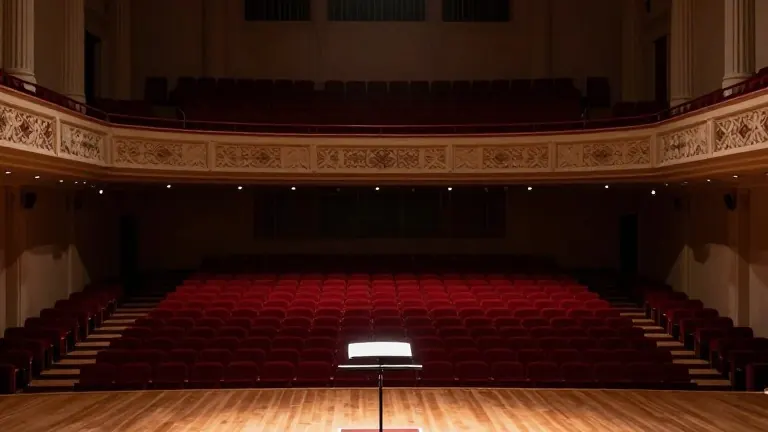
The National Symphony Orchestra will perform approximately half of its usual number of concerts this season after losing its primary home. The reduction follows the closure of the John F. Kennedy Center for the Performing Arts, a situation that has forced the 95-year-old ensemble to operate from six alternative venues in the greater Washington, D.C. region.
Financial projections indicate a steep decline in income for the orchestra. According to reports from The Washington Post, ticket revenue is expected to fall by about half. Donations are projected to decrease by a quarter, a drop attributed in part to severe cuts within the Kennedy Center's development department. The orchestra also lost most of its former staff, including executive director Jean Davidson, who departed in March. Davidson cited the turmoil at the Kennedy Center as the primary reason for her exit.
The instability stems from a legal and political dispute that began in early 2025. President Donald Trump took control of the center after removing board members and firing president Deborah Rutter. The conflict centered on the addition of Trump's name to the building's facade. Following months of boycotts and falling ticket sales, the center closed its doors on Sept. 15, leaving the orchestra without a permanent stage.
Music director Gianandrea Noseda, who has led the group for nine years, described the news as a cold shower. He stated that his initial reaction was uncertainty about how the orchestra would function without its home. Despite the disruption, Noseda extended his contract with the ensemble through 2031. He described leaving the position as too easy and potentially cowardly, emphasizing the duty of a music director to serve the orchestra and the community.
The season opened on Sept. 26 at the Music Center at Strathmore in Bethesda, Md. The program featured new works by Carlos Simon alongside pieces by Tchaikovsky and Respighi. The venue was full, and audiences responded positively to the performance. Anne Midgette, a former classical music critic for The Washington Post, characterized the evening as bittersweet, noting the difficulty of a major orchestra performing outside its traditional hall.
Associate principal double bassist Rick Barber, a member of the orchestra since 1995, said the closure caused anxiety among the musicians. He noted that while political divisions are visible in national life, they disappear when he plays. Barber believes the orchestra will survive and expects the ensemble to remain focused on the music despite the logistical challenges.
The shortened season serves as a financial test for the group. Midgette stated that the varying venues would be an acid test for audience engagement. She questioned how many people remain vitally interested in the orchestra. The Phoenix Symphony recently shut down, illustrating the financial pressures facing symphonies nationwide. Factors such as the cost of gas and groceries make attending a concert more challenging for patrons.
Source: WUFT